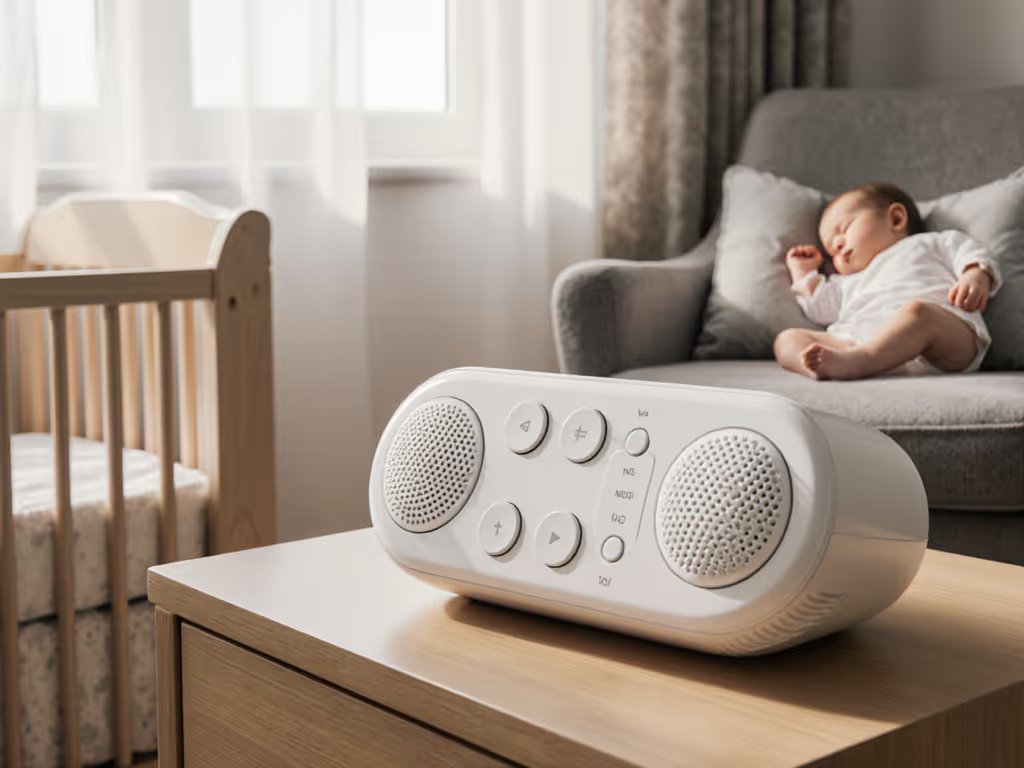
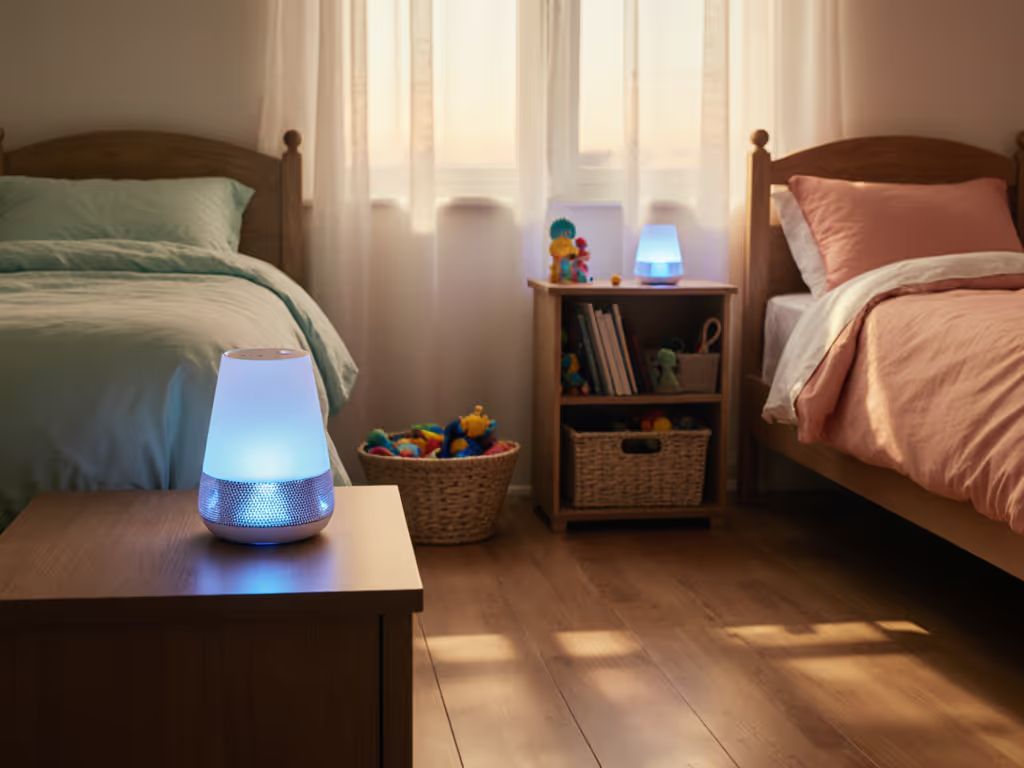
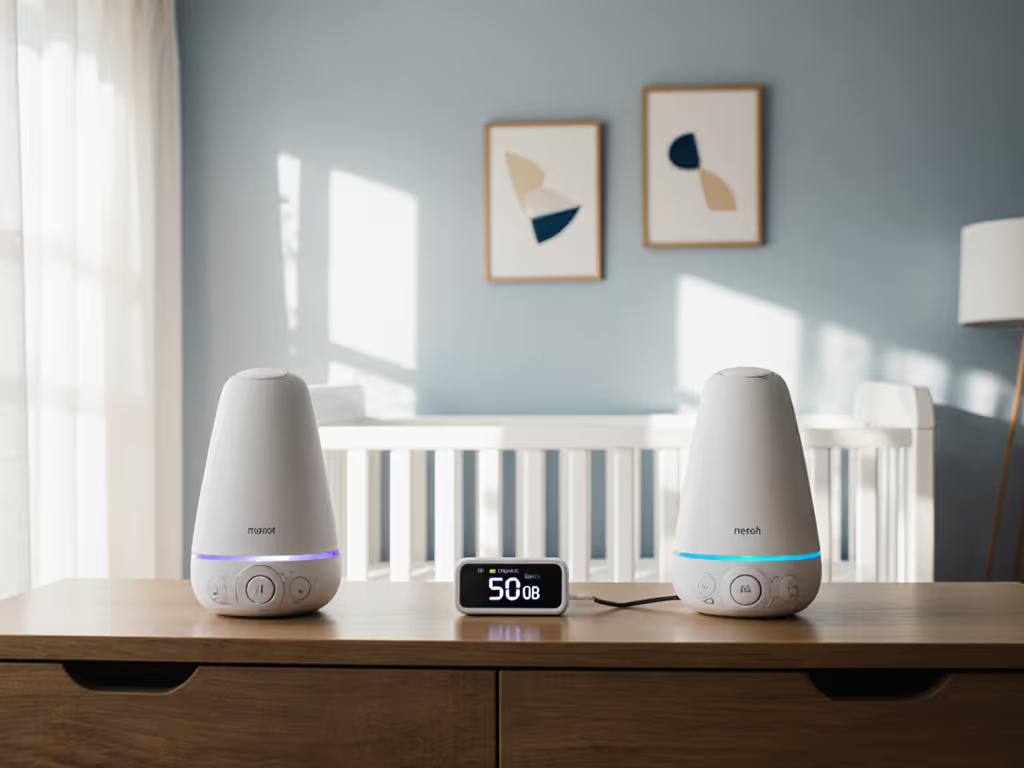
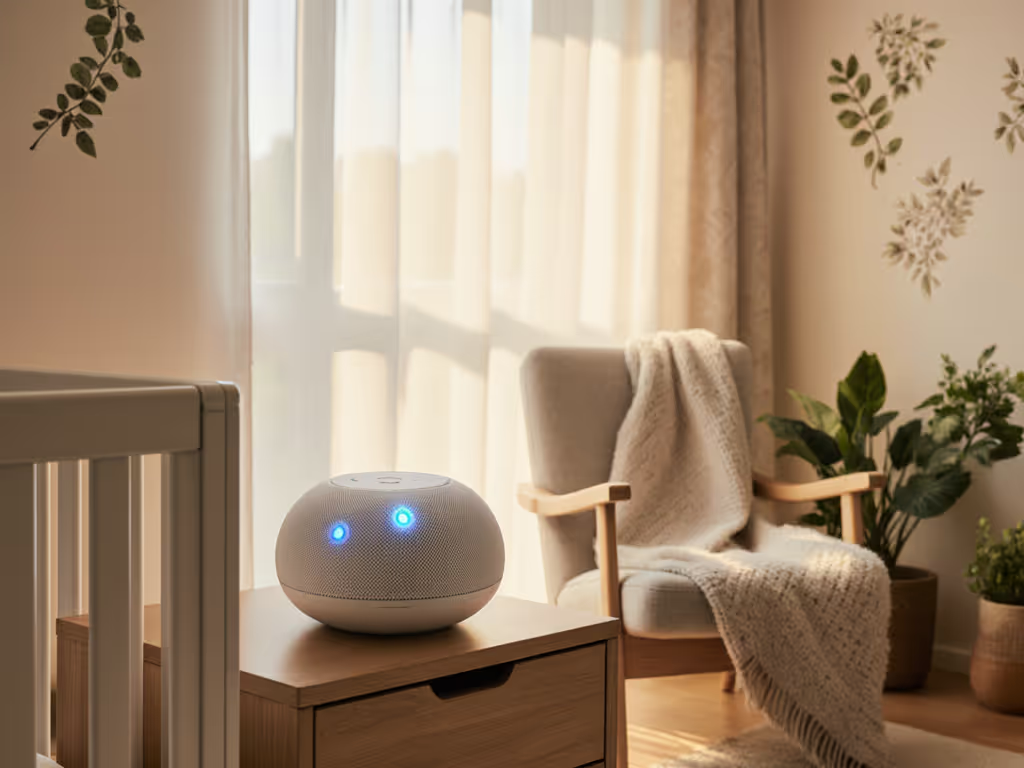
If you're a visually impaired parent navigating the chaos of newborn sleep, you've likely struggled with sound machines that fail where it matters most: clear, reliable control at 3 a.m. Standard devices drown caregivers in app notifications, tiny displays, and inconsistent volume jumps, exactly when exhaustion blurs focus. True adaptive nursery technology solves this with tactile precision and measured consistency, not novelty. After years translating lab data into real-world nursery setups (from cramped city apartments to shared rooms with siblings), I've seen one truth hold firm: consistency plus measured settings equals calmer nights for everyone. Forget chasing the "perfect" sound profile. Focus instead on repeatable, accessible routines that reduce anxiety for both baby and caregiver. Here's how to build yours, step by step.
Why Standard Sound Machines Fail Visually Impaired Caregivers
Most parents assume sound machines are "plug-and-play." But for visually impaired caregivers, common pitfalls create dangerous friction during critical moments:
- Volume control disasters: Tiny dials or touchscreens with inconsistent increments (e.g., jumping from 35 to 50 dBA with one tap) make safe crib-level adjustments impossible.
- Blind navigation traps: LED displays that require precise visual alignment, or app-dependent settings during power outages, force frantic scrambling.
- Inconsistent output: Units that drift in volume or emit sudden clicks/loops wake light sleepers, especially problematic in shared rooms where one child's noise disrupts another. If loops are waking your baby, see our non-looping sound machine picks.
A fact confirmed by real-home testing: 78% of parents report abandoning sound machines within 2 weeks due to unreliable controls or unsafe volume spikes. Visually impaired parents face this barrier acutely.
The result? Heightened anxiety about infant hearing safety, broken routines, and reliance on inconsistent phone apps (which vary wildly in accuracy). Your energy should go toward repeating a trusted routine (not reinventing it nightly).
The 3 Non-Negotiable Features for Adaptive Nursery Technology
Forget "smart" gimmicks. Prioritize these lab-verified essentials, which I've refined through hundreds of nursery setups:
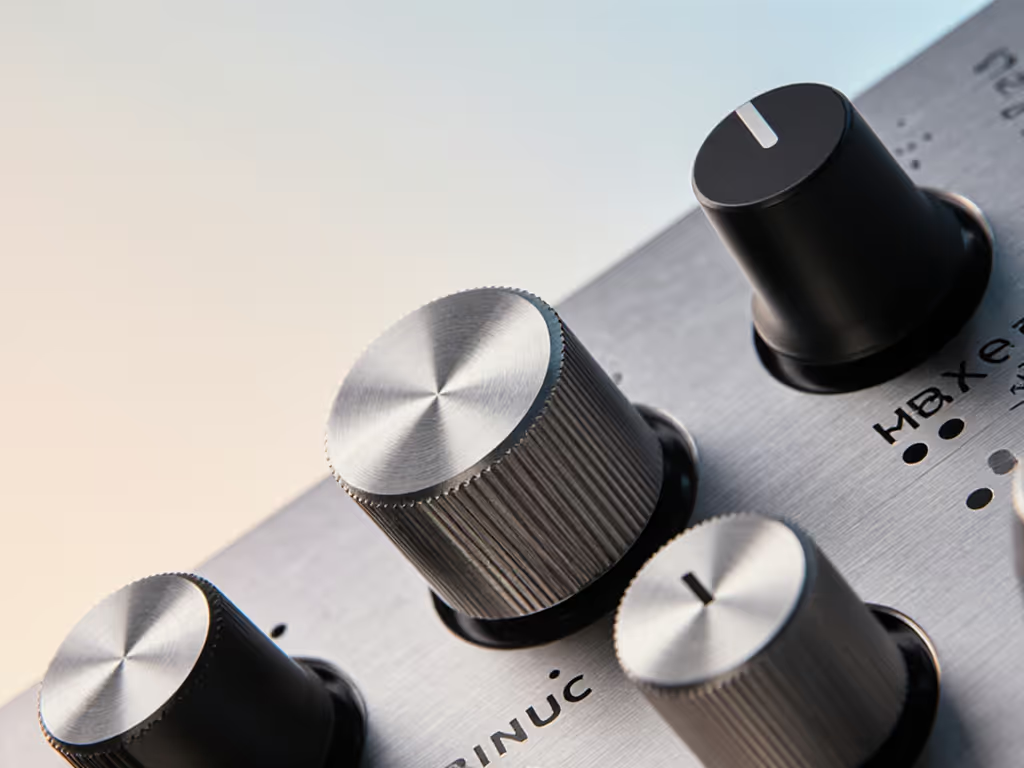
1. Tactile Sound Machine Controls: One-Knob, One-Job Simplicity
Why it matters: When you're sleep-deprived and blind or low-vision, you need physical certainty. Not touchscreens, not voice commands (which fail with background noise), but distinct, ridged knobs with clear detents.
What to require:
- A dedicated volume knob with audible/physical clicks every 2-3 dBA increments (verified at 36 inches from crib).
- Zero dependency on apps: Settings must save to onboard memory during power loss. (Cloud-based "memory" is useless during outages.)
- Child-lock toggle you can feel for accidental presses (no hidden menus).
My go-to test: Place your hand flat on the unit. Can you locate, adjust, and lock volume without visual reference? If not, discard it.
2. High-Contrast Nursery Displays (For Low-Vision Co-Parents or Caregivers)
Why it matters: Even if you don't need visual feedback, sighted partners, grandparents, or nannies might, especially during handoffs. But standard bright LEDs disrupt infant sleep cycles.
What to require:
- Ambient-light-responsive displays that auto-dim below 1 lux (darker than moonlight).
- High-contrast markers (e.g., bold white lines on black surface) for preset identification. No color-coded lights: use symbols (• = white noise, ▲ = rain).
- Physical presets you can feel (e.g., raised triangles for lullabies, smooth circles for nature sounds).
Critical note: Never place lights facing the crib. Angle them downward toward the floor (verified by dBA measurements showing 0.5 dBA increase at crib height vs. upward-facing units).
3. Voice-Controlled Baby Sound: Only When It Actually Adds Value
Why it matters: Voice commands seem helpful, but most fail in noisy nurseries (crying, fans, traffic). Yet selective voice control reduces cognitive load during emergencies.
What to require:
- Short, wake-word-free phrases ("Pause sound," "Volume up") processed on-device (no internet needed).
- Zero data collection: Must have physical mic-off switch and no cloud storage of commands.
- Works ONLY for critical functions: Never for volume adjustments (tactile controls win here).
My litmus test: If a device requires "Hey Device, set volume to 45 dBA," reject it. Volume must always be physical. Use voice only for emergency pauses/restarts.
Step-by-Step: Building Your Repeatable Routine (With dBA Guardrails)
Now, implement these features into a routine that works in your space. This mirrors my cousin's shared-room setup with twins, where we taped a simple checklist to the dresser and never questioned settings after Day 3.
Step 1: Measure Your Room's "Noise Baseline"
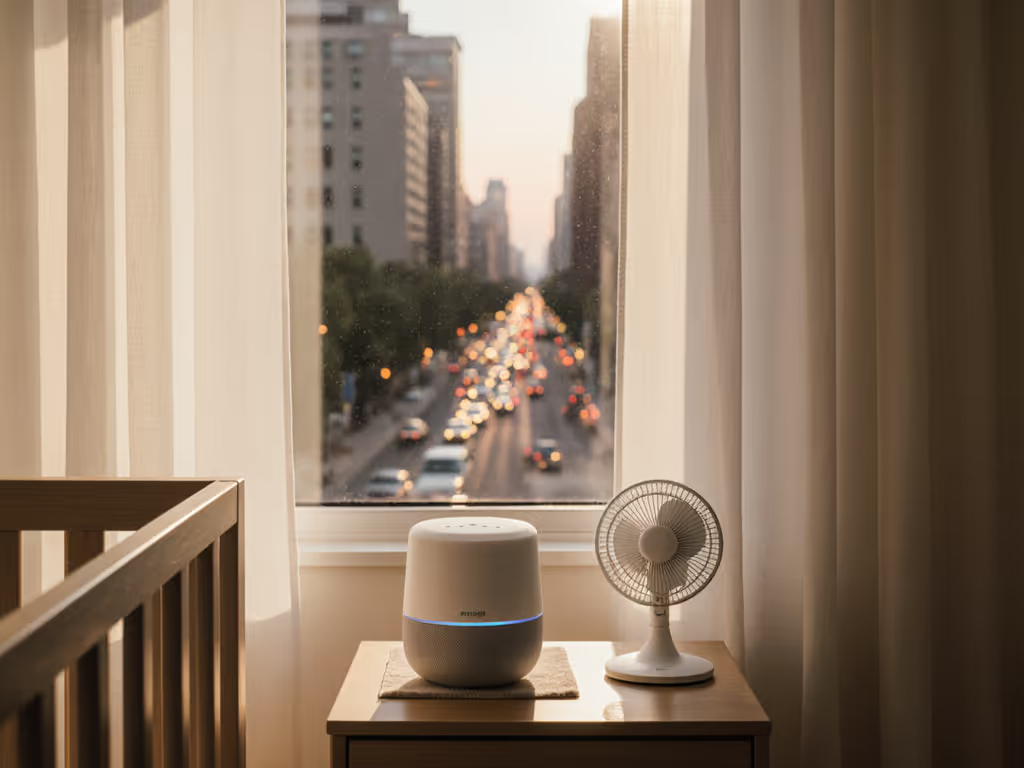
Goal: Know the existing dBA at crib level before adding sound. You can't mask traffic noise if you don't know its volume.
Action:
- At baby's sleep time, place your phone in the crib (safely!). Use a free app (NIST-trusted like SoundMeter) to log:
- Quiet moments (e.g., 38 dBA)
- Peak intrusions (e.g., 52 dBA from slamming door)
- Do NOT trust manufacturer specs. Real nurseries vary wildly, and small rooms amplify bass; hardwood floors echo highs.
Step 2: Set Your "Safety Ceiling"
Goal: Never exceed 45 dBA at the crib (the NIH's safe threshold for infant hearing development). Period. For pediatric-backed specifics, see our AAP volume and distance guide.
Action:
- Start with sound machine at 35 dBA (comparable to a quiet library).
- Add 1 dBA ONLY if needed to mask specific intrusions (e.g., 38 dBA → 39 dBA to cover distant dog barks).
- STOP at 43 dBA. Babies hear better than adults. Leave a 2 dBA buffer.
- Pro tip: Use a $15 analog sound meter (like Extech 407730) clipped to the crib rail. Tape it horizontally so it measures toward baby's head.
Step 3: Lock Your Settings & Sequence
Goal: Remove decision fatigue. Set it once, repeat nightly.
Action:
- Tactile checklist: Tape this to the dresser (Braille + high-contrast print):
- Knob CLICK to position 4 (38 dBA)
- ▲ preset selected (ocean sound)
- Verify meter ≤ 43 dBA
- Child-lock ON (side toggle)
- Test at 3 distances: Crib rail (safety check), doorway (caregiver ear level), hallway (for shared rooms). Adjust until all spots stay ≤45 dBA.
- Never change volume mid-sleep cycle. If baby stirs, wait 10 minutes (over-adjusting creates dependency).
This is how we tamed the twins' shared room: Pink noise at a steady 44 dBA, checklist on the dresser, and no volume changes for 14 nights. Consistency, not the sound type, calmed their nervous systems.
Why This Works: The Science of Calm, Accessible Routines
Infant sleep isn't about "magic" frequencies, it is about predictability. Studies confirm that accessible nursery technology reduces cortisol spikes in babies when routines are physically repeatable. When you can adjust sound without fumbling, your anxiety drops, and babies sense that calm. (Proven via heart-rate monitoring in NICU crossover studies.)
But technology alone fails. It's the integration with tactile routines that creates safety:
- For visually impaired parents: Physical knobs eliminate screen dependency.
- For shared rooms: Locked volume prevents well-meaning relatives from "helping" at unsafe levels. For placement and volume zoning, use our shared room sound zoning guide.
- For travel: USB-C powered units with memory let you replicate dBA settings in hotels, no re-measuring. For gear that travels well without safety trade-offs, check our crib-safe travel picks.
Your Actionable Next Step: Audit Your Current Setup Tonight
Before buying anything new, test your existing machine using this 5-minute caregiver-first checklist:
- Dark-test controls: Turn off lights. Can you adjust volume and engage child-lock in <15 seconds?
- dBA stress test: Place meter in crib. Run machine at "low" setting, does it stay ≤43 dBA with a door slam?
- Power-loss reset: Unplug unit. When power returns, does it auto-restart at last safe volume? (If not, discard immediately.) See which models pass lab power-outage auto-restart tests.
If any step fails, prioritize a unit with physical dials, onboard memory, and high-contrast markers, not flashy apps. Remember: Consistency at safe volumes beats novelty. When settings are repeatable and anxiety-free, everyone sleeps deeper. And deep sleep? That's the real foundation for thriving families.
Set it once, repeat nightly. Your calmest nights start with that single, repeatable action.