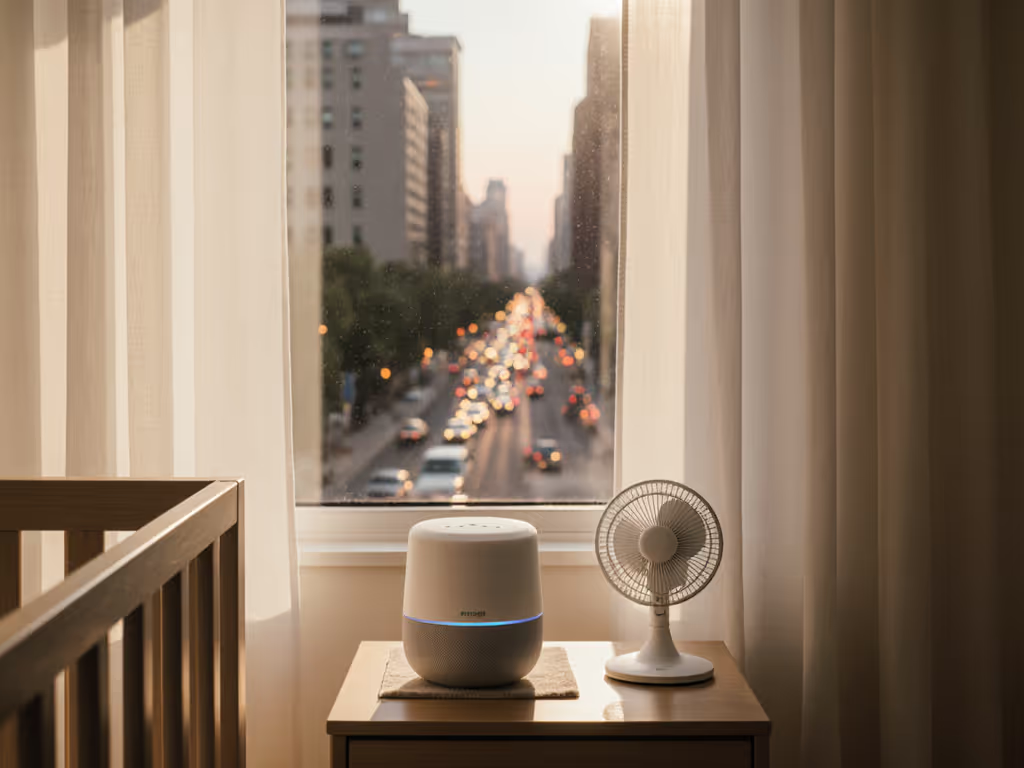
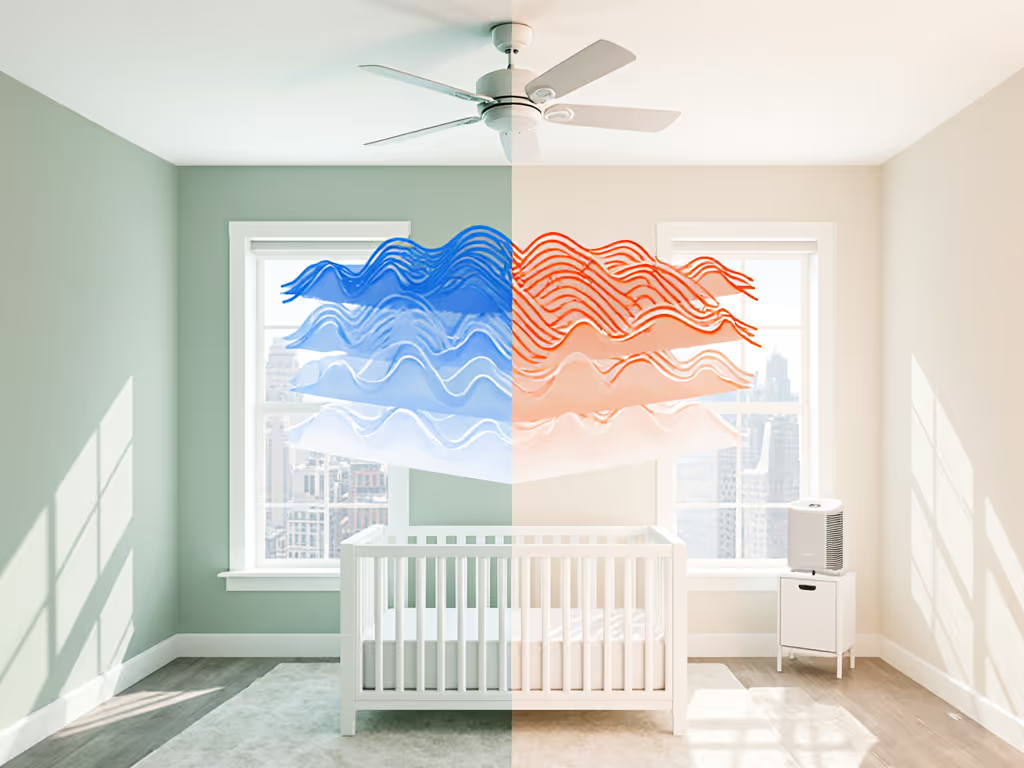
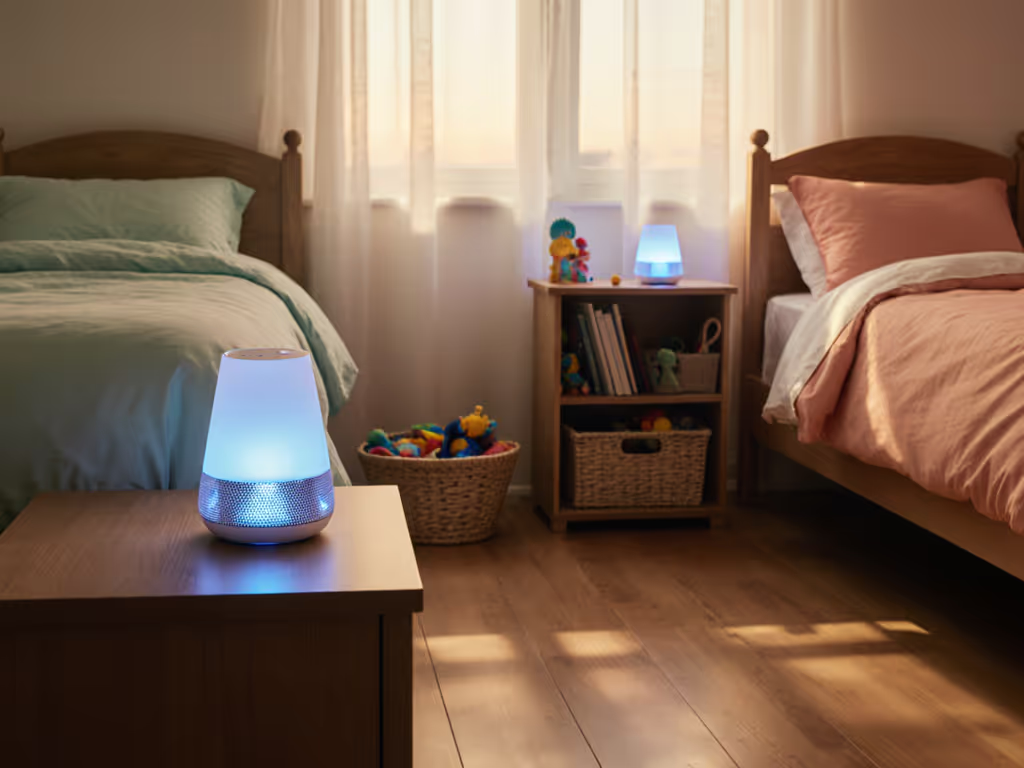
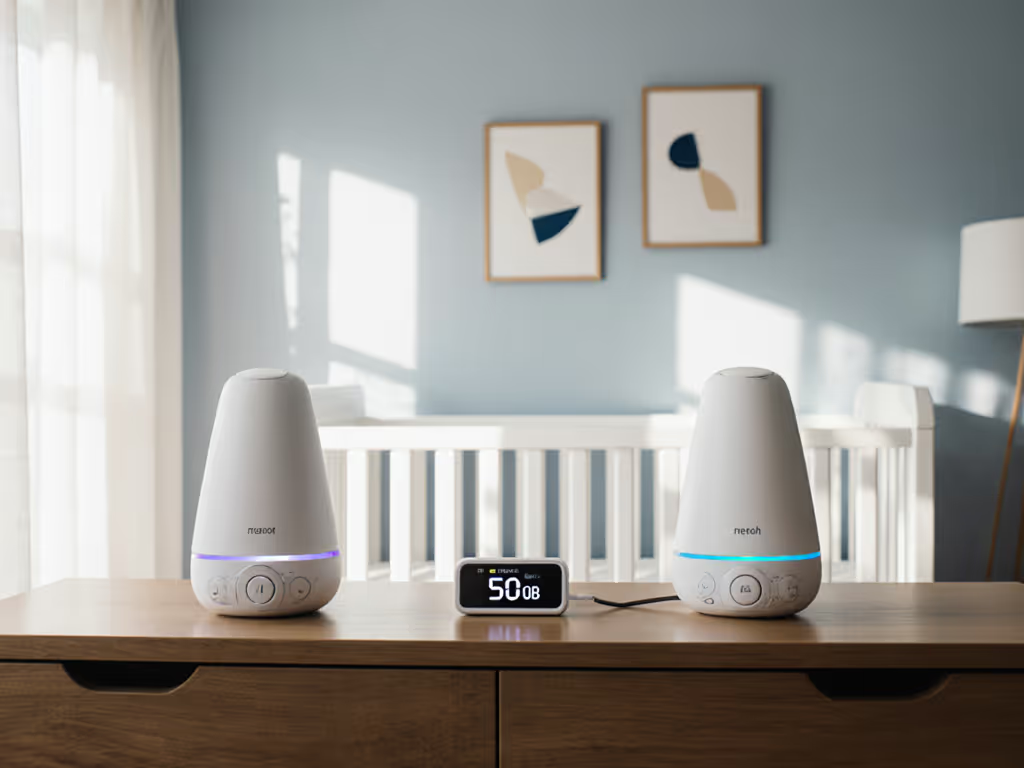
In most city nurseries, a dedicated digital noise masker (noise machine) will mask traffic and hallway sounds more effectively and predictably than a fan at safe infant sound levels, though a fan can work in milder environments or as part of a hybrid setup.[1] For parents comparing fan vs digital noise masking, the key is how controllable and consistent your noise machine noise is at the crib, not which gadget looks more "baby" on the nightstand.[1][10] For data-driven comparisons tailored to city nurseries, see our city-noise lab results.
How sound masking actually works in a city nursery
Sound masking doesn't eliminate noise; it reduces the contrast between noise and the room's baseline hum.[1] You introduce a steady, non-intrusive background sound so that sudden intrusions (honks, doors, footsteps) are less jarring and less likely to wake a light sleeper.[1]
In practice:
- A quiet room plus one slam in the hallway equals big contrast, higher wake-up risk.[1]
- A room with a stable "whoosh" plus the same slam equals smaller contrast, the brain often stays in deeper sleep.[1]
This matters more in a high-noise environment sound solution like a city nursery because you're not fighting one predictable train, you're dealing with:
- Late-night deliveries
- Motorbikes or buses
- Neighbors' doors and voices
- Your own footsteps during checks
No single device can "block" that; only walls and windows can genuinely reduce sound energy.[1] Fans and noise machines work by masking, not blocking.
Make any room familiar: pack light, measure once, repeat.
The goal is to create a repeatable sound floor in your baby's room that travels with you, from apartment to grandparents' house to hotel. Pack light, sleep right.
Fan vs digital noise masking: what's physically different?
The sound itself
Fans
- Generate sound from moving air and motor vibration
- Typically emphasize mid and high frequencies (air rushing, mild hiss)
- Frequency profile depends on fan size, blade shape, and speed
- Airflow and sound are tied together: quieter = less airflow
Digital noise machines
- Use electronics to generate or play back broadband sounds (white, pink, brown noise, etc.)[10]
- Can be tuned toward low-frequency "rumble" (brown noise) or a softer spectrum (pink noise) that many people prefer for traffic masking[1]
- Don't have to move much air, so sound profile is not constrained by cooling needs[10]
According to comparative testing, noise machines offer superior control and targeted masking capabilities compared with fans, especially for heavy and irregular traffic.[1] Fans still perform respectably and add cooling, but their sound profile is less customizable and changes when you adjust speed.[1]
Control and consistency
Key questions for any city nursery:
- Can I set a volume and spectrum and get the same thing every night?
- Does the sound stay stable through the night, no clicks, loops, or sudden jumps?[1][10]
Evidence-based comparisons of traffic sound machine comparison setups show:
- Noise machines: finer volume steps, multiple noise colors, and more stable output across the night.[1][10]
- Fans: volume depends on speed settings, distance, and airflow direction; motor noise may change over time or with dust and wear.[1]
Industry testing for adults has found that for background noise masking performance, the best results usually come from machines offering pink or brown noise and consistent output.[1] By analogy, that same controllability is exactly what you want when you're trying to keep a baby asleep in an unpredictable soundscape.
Safety basics: volumes, distances, and babies
According to controlled tests for urban sleepers, an effective masking range is around 45-55 dB at the sleeper's ear, enough to cover traffic hum without becoming a stressor itself.[1] For placement distances and AAP-backed limits, read our volume and distance guide. Many pediatric audiology recommendations extend this principle and advise keeping continuous sound in nurseries nearer the lower end of that range (around the mid-40s dBA at the crib) to protect developing ears; this extension is based on typical clinical guidance, not directly on the cited study.
What you can safely extract from the data:[1]
- Treat 45-55 dB as a ceiling when masking city noise.
- Aim for the lowest volume that still covers your local disruptions, not "as loud as it goes."[1]
- Place the sound source a reasonable distance from baby and between the noise source and the crib, not right up against the crib slats.[1]
Because most phone dB apps aren't lab-grade, they can disagree. Still, they are useful to ensure you're not wildly overdoing it: stand at the crib, microphone roughly where baby's head would be, and adjust until readings hover around the mid-40s dBA. This use of apps as relative gauges is a practical interpretation of general measurement practices.
City nursery sound effectiveness: where fans shine, where they fail
Where a fan can be enough
A fan-only setup can work if:
- Your external noise is mostly a steady hum (distant traffic, HVAC) rather than sharp events
- You need the cooling anyway
- The nursery is small and you can position the fan so its "whoosh" sits between the noise source and the crib[1]
Benefits:
- Two-in-one: airflow + masking for the cost and footprint of one device[1]
- Low tech: mechanical switch, no apps, no loops, no firmware issues
- Often a softer, more natural hiss some parents prefer
Limitations in urban nurseries:
- Sound spectrum is what the fan gives you, no brown/pink noise tuning
- Volume control is coarse: off / low / medium / high
- At baby-safe distances, smaller fans may simply be too quiet to mask honks, doors, or loud conversations
- To get enough masking, you may be tempted to crank the fan speed, raising both airflow (chill risk) and sound level
If your city block is relatively calm and you already run a fan for temperature, this is a reasonable starting point. But in high-noise environment sound solutions (thin windows, bus routes, late-night restaurants), a fan often cannot deliver enough controlled masking without trade-offs.
Why digital noise masking generally wins the city nursery
Controlled comparisons of noise machine vs fan for sleep in traffic-heavy settings show that a well-chosen noise machine outperforms a standard fan for minimizing disruption from heavy or irregular traffic.[1]
Reasons this translates well to nurseries:
-
Targeted low-frequency masking
Traffic often contains a strong low-frequency rumble from engines and road noise.[1] Pink or brown noise is specifically recommended to address that rumble.[1] Fans tend to emphasize mid/high frequencies, which leaves some of that low-frequency energy less covered.
-
Fine-grained volume steps
Noise machines commonly allow small volume increments, making it easier to sit right at the threshold where the sound covers the street but stays within conservative infant-safe ranges.[1][10]
-
Stable sound over time
Unlike mechanical fans whose output can drift as bearings age or speed settings change, digital machines are designed for volume consistency throughout the night. That stability is highlighted as important in sound-masking performance testing.[1]
-
Hybrid setups work best in the noisiest locations
Evaluations of urban traffic masking often recommend combining a fan with a noise machine for maximum coverage: fan for airflow and some high-frequency masking, and a brown/pink noise machine to reinforce the low end.[1]
For most persistent urban traffic situations, a dedicated noise machine with access to brown or pink noise outperforms a standard fan, especially at a given loudness.[1]
In other words, if your baby's window faces a busy street or you often hear sirens and late-night trucks, a digital noise masker is usually the primary tool, and the fan becomes optional.
Background noise masking performance in the real nursery
From my own kits and travel setups, here's how I translate lab-style results into a quick city nursery decision. If you need portable options, compare our crib-safe travel sound machines to pick a reliable on-the-go masker.
Step 1: Measure your room's worst case
Adapting a tested protocol:[1]
- Record 10 minutes of nighttime sound near the nursery window using your phone.[1]
- Listen with good headphones and ask:
- Do I hear a low rumble (engines, distant traffic)?
- Or sharper high-pitched sounds (tires on pavement, squeaky brakes)?[1]
- Note the loudest disruptions: honks, doors, voices.
Step 2: Match the masking sound to the noise
- If you hear a low-frequency rumble, prioritize brown or pink noise from a digital machine.[1]
- If it's mostly hissy tires and occasional voices, both a fan and a pink-noise profile may work; test both.
Step 3: Place the device intelligently
Consistent with sound-masking best practices:[1]
- Put the fan or noise machine between the external noise source and the crib. Often near the window but angled toward the room.[1]
- Avoid tight corners where sound can reflect unevenly.[1]
- Start a few feet from the crib, then use your app at crib height to ensure you're in the mid-40s dBA range.
Step 4: Compare fan vs digital over 3 nights
Over six nights, alternate:
- 3 nights with fan only
- 3 nights with digital noise only (same bedtime, same routine)
Track:
- How often do you hear outside noises over the masking sound?
- How often does baby startle or rustle right after a honk or door slam?
- Does either sound feel irritating to you after 20-30 minutes?
This small-scale home trial is a practical way to personalize what the lab results already suggest: in most heavy-traffic cases, the digital noise machine will provide better city nursery sound effectiveness than the fan.
Two-minute room reset: fan or noise machine
Shared rooms, hotel cribs, grandparents' guest rooms, I use the same quick process each time.
-
Kill the sharp sounds
- Close windows fully, latch if possible.
- Soft-close any squeaky door latches with a tiny bit of tape or felt.
-
Place your masker
- Position your fan or noise machine between the main noise source and the crib.
- Keep cords out of reach; painter's tape is your friend for a fast, non-damaging cable route.
-
Set volume once, then leave it
- Use your phone app to aim around mid-40s dBA at the crib.
- Resist the urge to "boost" the volume every time noise annoys you, consistency beats loudness.
-
Check the light footprint
- Dim or cover LEDs on the machine with a small piece of opaque tape if needed.
-
Save the setup
- Note the dial position or volume number in your phone: "Nursery traffic mode: level 6, brown noise, device 5 ft from crib."
Make any room familiar: pack light, measure once, repeat.
Once you have a working preset, you can recreate it almost anywhere in under two minutes.
Fan vs digital noise masking: quick comparison for city nurseries
| Feature / Need | Fan | Digital noise machine |
|---|
| Primary function | Cooling + incidental masking | Dedicated sound masking[1][10] |
| Control of spectrum | None; fixed by design | Multiple profiles (white/pink/brown), often traffic-friendly[1] |
| Volume control | Coarse (few speeds) | Fine steps, easier to hit safe but effective range[1][10] |
| Best for | Mild urban noise, hot rooms, tight budgets | Heavy/irregular traffic, thin walls, shared rooms[1] |
| Portability | Bulkier, needs plug, awkward for travel | Many compact units, often USB-powered (inferred from market norms) |
| Hybrid use | Can combine with a noise machine for extra coverage[1] | Often the primary masker; fan optional[1] |
Actionable next step: test your nursery in one week
Here is a simple, low-mental-load plan to move from guesswork to data.
Tonight - Tomorrow
- Record 10 minutes of window noise after bedtime.[1]
- Classify your block: mostly hum (mild) or hum + sharp events (heavy).
Next 3 nights: Fan trial
- Position your fan between window and crib.
- Use your phone app to set sound at roughly mid-40s dBA at the crib (interpretation of adult masking ranges).[1]
- Log any wake-ups tied to outdoor or hallway noises.
Following 3 nights: Digital noise trial
- Swap in a small noise machine using pink or brown noise if traffic rumble is present.[1]
- Match the same measured level at the crib.
- Again, log wake-ups and your own comfort with the sound.
By the end of the week, you will know, based on your own room, whether fan vs digital noise masking truly changes outcomes for your baby.
If your logs show fewer noise-triggered disruptions and a calmer room with digital noise machine noise, make that your default at home and on the road. If the fan performs similarly and you value cooling, keep it simple and stick with the fan.
Either way, anchor your choice in measured sound at the crib, repeatable settings, and a setup you can recreate anywhere. Pack light, sleep right.