White Noise vs Nature Sounds for Baby Sleep
By Maya Okafor • 28th Apr
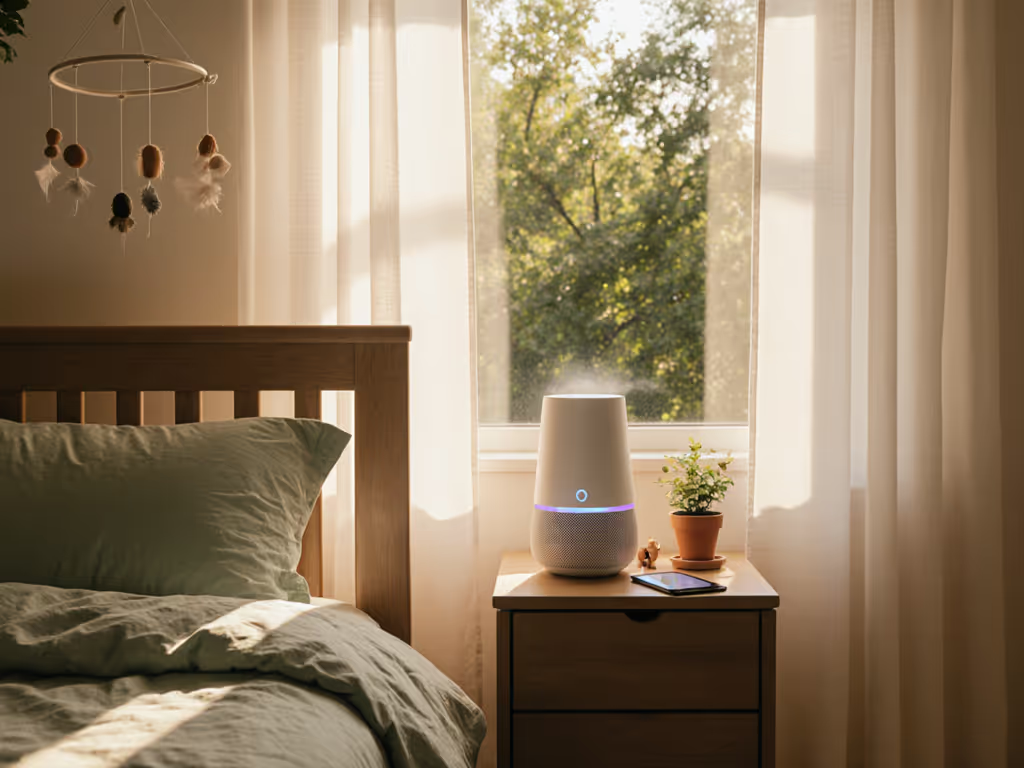
Your baby won't sleep. The neighbor's dog barks at 2 a.m., traffic rumbles outside, and your older child's bedroom door slams at naptime. You've read conflicting advice: white noise ruins sleep architecture, nature sounds build dependency, pink noise is just marketing. The sound of white noise and various baby sleep sound effectiveness claims feel equally credible and contradictory. What actually works, and more importantly, what's safe?
The answer isn't one-size-fits-all, but it is measurable. Unlike sleep training philosophies, background sound choices rest on simpler ground: physics and frequency. This guide translates lab data into a room-by-room decision framework so you can stop second-guessing and start protecting your baby's rest without guesswork.
The Problem: Why General Advice Fails in Your Home
Most guidance about sound for infant sleep glosses over context. "White noise helps babies sleep" is true in a hospital nursery with controlled acoustics and false in your downtown apartment where sirens peak above safe levels. "Nature sounds are soothing" works beautifully in a quiet country cabin but may mask genuine hazards (a smoke alarm, a crying sibling) in a shared room.
The real gap is this: you don't need philosophy. You need decibel levels at your baby's crib, frequency profiles that match your specific noise problem, and a device that remembers settings so routines don't depend on memory. For step-by-step placement and volume safety based on AAP guidance, see our volume and distance guide.
Understanding the Two Categories: White Noise vs. Nature Sounds
What Is White Noise?
White noise is a consistent sound spanning all audible frequencies at equal intensity. Think TV static or a fan on high; the "shh" sound feels flat and unchanging. That steadiness is its mechanism: by filling the auditory space with continuous, predictable energy, the brain habituates quickly and stops reacting to it. This makes white noise a powerful masking tool; it drowns out sudden, unpredictable noises (a dog bark, a door slam, traffic) by training your baby's brain to ignore the baseline and wake only to true threats.
What Are Nature Sounds?
Nature sounds (ocean waves, rain, forest ambience, birdsong) vary in frequency, amplitude, and timing. They're textured rather than flat. That variability mimics environments humans evolved in, potentially triggering relaxation responses linked to safety. Unlike the masking mechanism of white noise, nature sounds work through relaxation: they lower cortisol and heart rate, create a sense of calm connection, and reduce the fight-or-flight response.
The distinction matters for your decision: white noise is a blocker; nature sounds are a soother. For lab-tested results on blocking traffic, pets, and sibling noise, read our noise masking comparison.
The Data: What Research Actually Shows
White Noise Effectiveness
White noise is the most-studied sleep sound. A 2021 study in high-noise NYC environments found it helped participants fall asleep faster. Hospital studies show it reduces nighttime awakenings. However, and this is crucial, a systematic review in Sleep Medicine Reviews concluded that overall evidence for white noise improving sleep was "little beneficial effect."
Why the mixed picture? Context. White noise excels in noisy urban environments where unpredictable sounds are frequent. It doesn't create deep sleep; it removes barriers to sleep by silencing distractions.
Nature Sounds Effectiveness
Nature sounds research focuses less on pure sleep onset and more on relaxation and stress reduction. Studies confirm they enhance mood, lower cortisol, and reduce sleep onset latency in subjective reports. Some participants report sleeping through the night more consistently with nature audio, though the mechanism is mood regulation rather than masking.
The trade-off: nature sounds won't block a barking dog; they'll calm the anxiety that follows.
The best evidence points to context dependence: white noise excels when masking unpredictable, disruptive sounds, whereas nature sounds may better support relaxation and the psychological aspects of sleep initiation.

Solving the Real Problem: A Guided Comparison
When to Choose White Noise
Select white noise if:
- You live in an urban or noisy suburban setting where external sounds are unpredictable and frequent (traffic, sirens, neighbors, pets).
- Your baby is a light sleeper easily disrupted by environmental noise.
- You need quick habituation; white noise's predictability allows the brain to tune it out within days.
- Your room acoustics are poor (thin walls, hard floors) and you need consistent baseline sound, not complexity.
- You use a white noise machine at a consistent volume in multiple rooms during transitions (travel, grandparent visits, daycare).
When to Choose Nature Sounds
Select nature sounds if:
- You live in a quieter environment or use a nature sound machine primarily to establish a wind-down ritual rather than block external noise.
- Your baby responds to auditory variety and appears soothed by dynamic, non-repetitive sound.
- You want to reduce nighttime anxiety (yours and your baby's); nature audio lowers stress hormones.
- You're in a shared room and need a calming backdrop that doesn't feel clinical or harsh.
- You prioritize the emotional and psychological benefits of "connection to nature" as part of bedtime ceremony.
The Practical Hybrid: Masking + Wind-Down
Many families find the best results by combining both strategies. Use white noise during high-noise hours (evening, early morning) to mask chaotic external sound. Transition to nature sounds or lower-volume pink noise during the actual wind-down 30 minutes before sleep. This approach leverages white noise's masking strength and nature sound's relaxation trigger.
Setting Safe Decibel Levels: The Measurement Reality
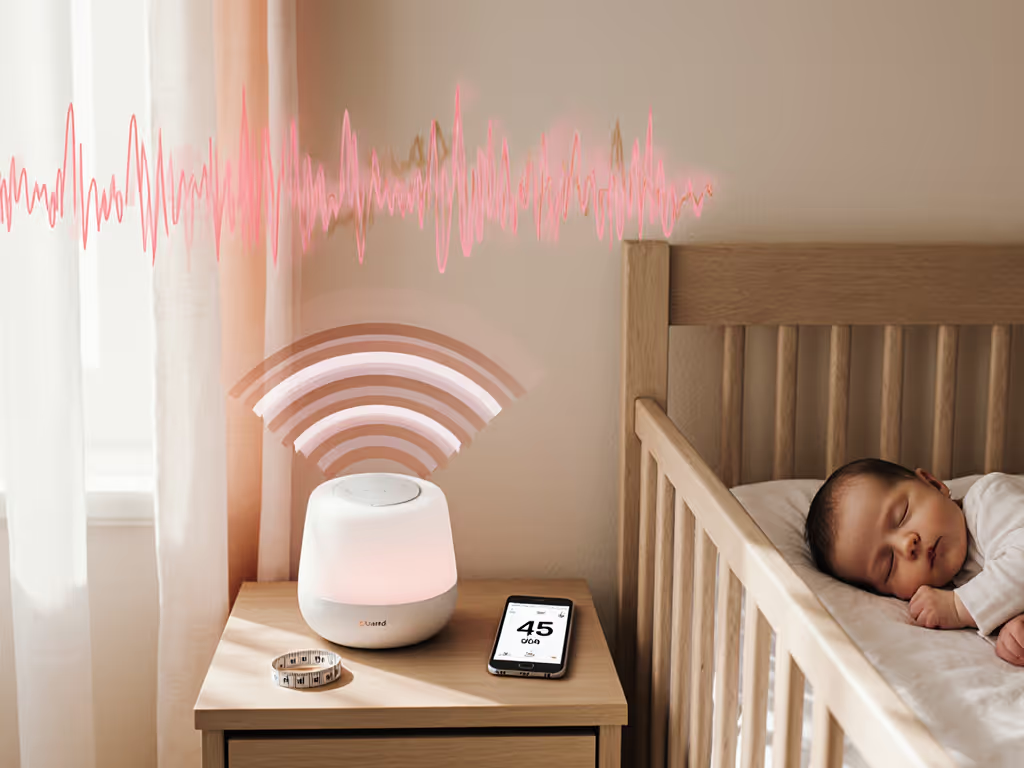
Here's where theory meets your nursery: decibels matter critically. Safe background sound for infants is roughly 50-55 dBA at the crib. For a deeper dive into safe levels, our 50-60 dB white noise guide explains the research and gives practical examples. That's quieter than a vacuum or dishwasher.
The Measurement Gap
Manufacturers rarely specify decibel levels at the crib distance. A "white noise machine" tested at 1 meter away might read 60 dBA but 68 dBA at 6 inches from the speaker. Phone apps give wildly inconsistent readings. You end up guessing.
Instead, use a simple checklist approach:
- Place the device: Position it at least 3 feet from the crib, ideally behind or to the side, never directly above or beside the baby.
- Measure baseline: Use your phone's decibel app (iOS built-in or Android "Decibel X") three times at crib height; average the readings.
- Set volume: Start at 45 dBA (quiet conversation level). If external noise breaks through, increase 5 dB increments until it masks the disruption without exceeding 55 dBA.
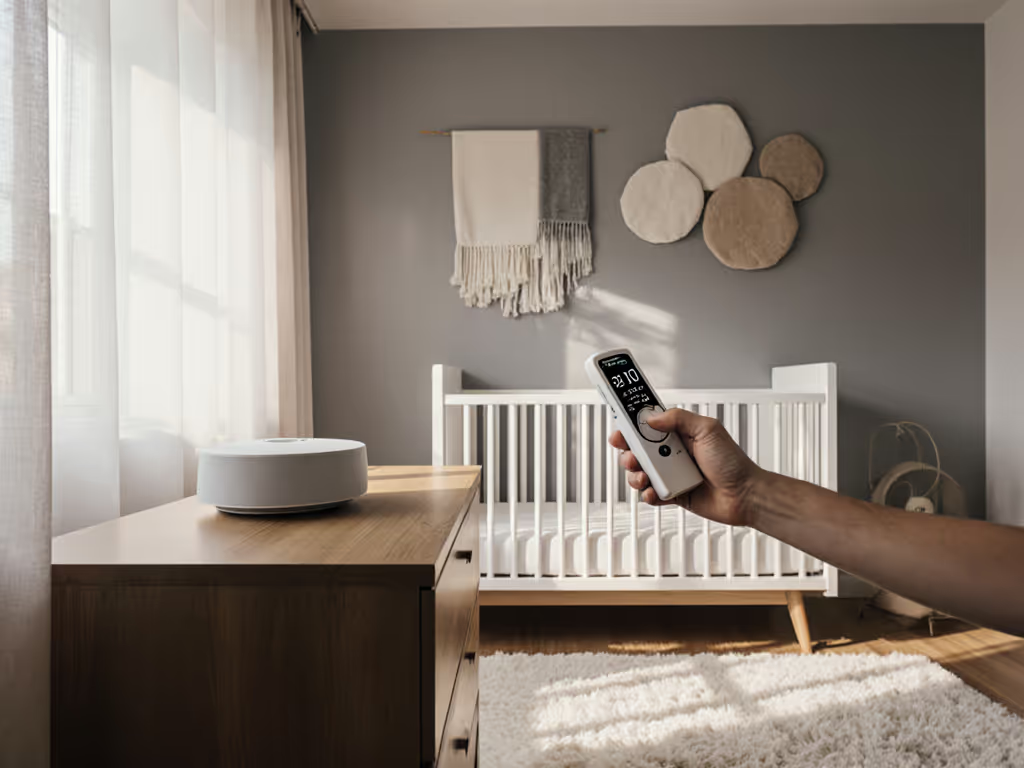
- Record the setting: Write or photograph the physical dial position (for example, "dial at 2 o'clock") so you can replicate it every night. Routines reduce guesswork.
Frequency Matters Too
Not all sound profiles suit all rooms. White noise spreads energy evenly across frequencies. This works well in rooms with hard walls and floors (sound bounces, boosting highs). In small rooms or with sensitive babies, even soft white noise can feel harsh because those treble frequencies are audible and irritating.
Pink noise (which has more power in lower frequencies, creating a softer rumble) works better in small rooms or for babies who react negatively to white noise. Brown noise (even deeper lows) suits those who find any high-frequency sound disruptive.
Nature sounds naturally vary frequency, so there's no single harsh peak; they adapt to room acoustics more gracefully.
Action step: If your baby reacts negatively to a white noise machine, try brown or pink noise before abandoning sound masking entirely. The device may be fine; the frequency profile may not match your space. Not sure which profile to use? See our white, pink, and brown noise guide for safe infant choices.
Practical Room-by-Room Setup
Shared Parental Bedroom
Problem: Your newborn wakes to parental movement, TV, whispered conversations. Solution: Low-volume white noise (48-50 dBA at crib) placed behind the baby, away from your bed. This masks your sounds without forcing you to tiptoe. Use a device with a single volume knob and no timer (you want consistency, not off-switches that interrupt the routine). The one-knob, one-job approach beats multi-mode machines.
Dedicated Nursery
Problem: Hallway noise, sibling sounds, or quiet enough that you worry about missing the baby's call. Solution: A gentle nature sound machine at 45-50 dBA creates psychological calm without masking genuine needs (a hungry cry will still register). The dynamic quality of nature audio feels less clinical for focused wind-down time.
Shared Sibling Room
Problem: One child's sleep must not collapse the other's; unpredictable waking and play noise. Solution: White noise at 50-52 dBA between beds, or a water sound machine (slightly dynamic, calming, masks mid-range sibling sounds without harshness). Use a device with memory (maintains last-set volume and mode after power loss); shared rooms see more plugging and unplugging, and you need settings that don't reset.
Travel & Daycare
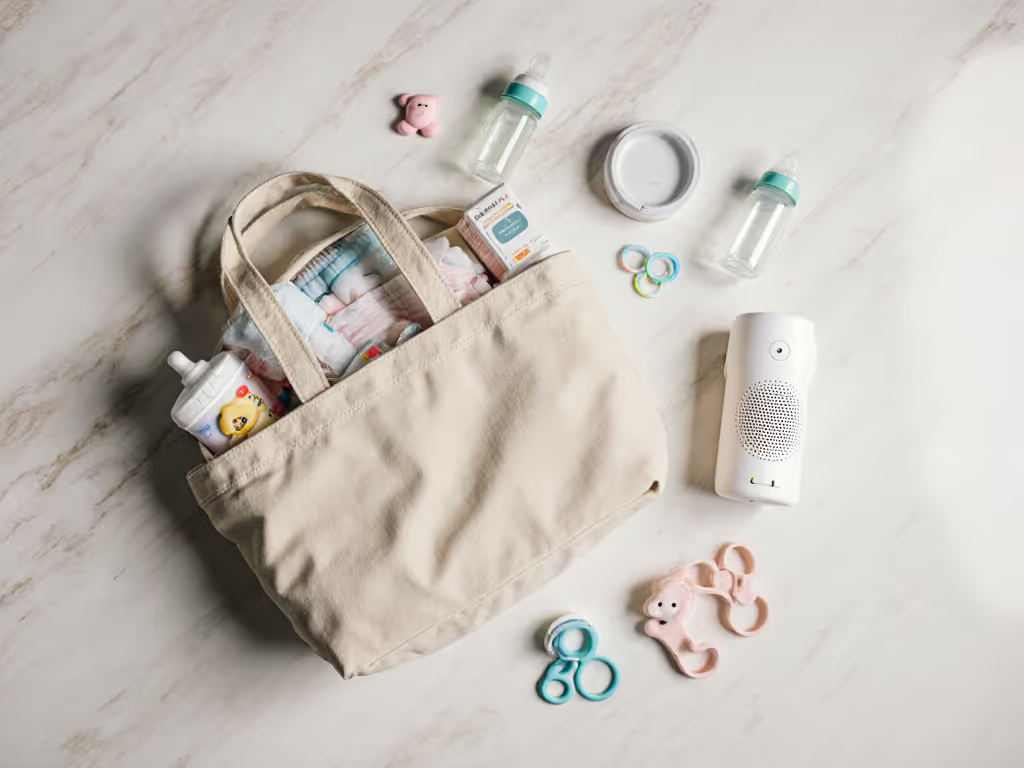
Problem: Hotel HVAC, thin walls, unfamiliar acoustics; routines collapse without familiar sound. Solution: A compact, USB-rechargeable device (white noise or animal sounds, a gentle nature variant) that remembers settings and fits in a diaper bag. For reliable on-the-go options, check our crib-safe travel sound machines. Test it in your home first so the baby learns it as a cue, not a novelty. When you arrive elsewhere, the familiar sound rebuilds routine immediately.
What to Avoid
Bright LED displays or nightlights: Disrupts sleep architecture and attracts a baby's gaze, defeating calm-down purpose.
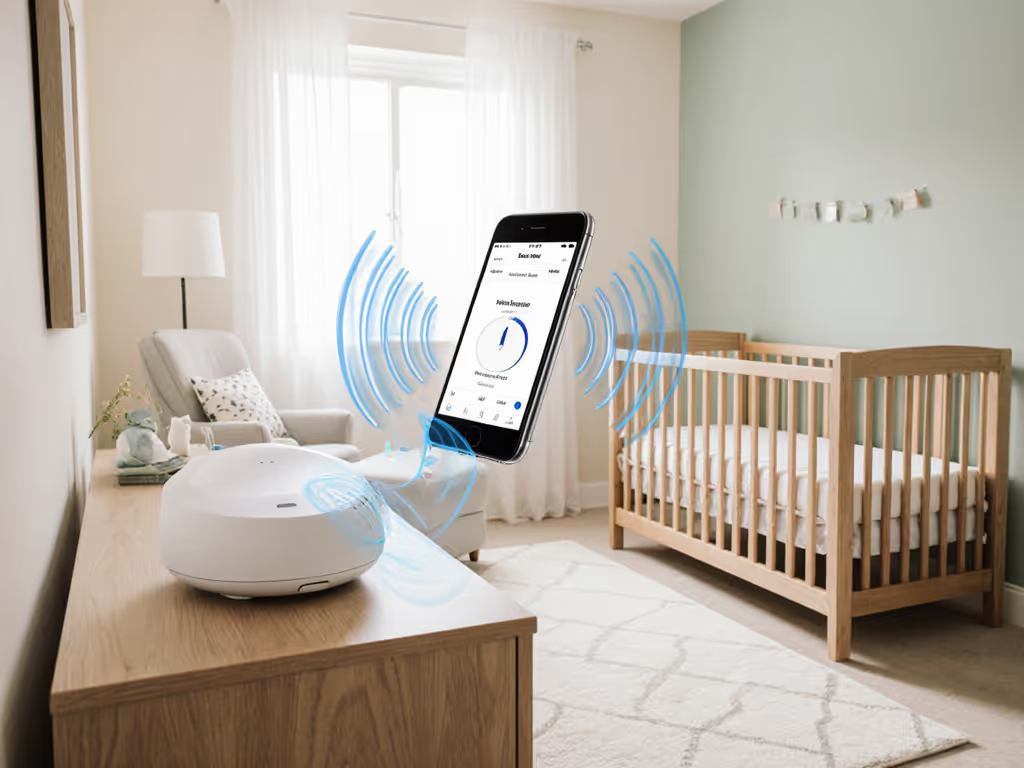
App-based or Wi-Fi-connected machines: Poor reliability, privacy concerns, and no manual override if your network drops. You lose the setting you've built routine around.
Preset timers: Babies wake when sound cuts off abruptly. Choose devices that run continuously through the night.
Extreme volume jumps between settings: Fine-tuned control (1-2 dB increments) beats jumps of 5 dB or more; you need precision, not approximation.
Complex multi-mode designs: Too many options invite tinkering and break consistency. A device with 3-4 sound profiles maximum and one volume control wins over a "32 sounds" machine that requires navigation.
Your Next Steps: A Checklist to Start
- Identify your noise problem: Is it external (traffic, neighbors, pets) or internal (siblings, household activity)? White noise if external; nature sounds or hybrid if internal.
- Measure your room's baseline: Use a phone app to record ambient sound at crib height, with no device running. This is your reference.
- Choose a device type: Single sound, hardware volume knob, memory, no Wi-Fi. Consider size and portability for your context.
- Place and set: 3+ feet from crib, away from baby's direct line of sight. Start at 45 dBA.
- Measure again: Test at crib height with device running. Adjust until baseline + device sound = 50-55 dBA.
- Record the setting: Write or photograph the exact dial position, mode, and placement. This becomes your routine.
- Trial for 5-7 days: Consistency matters more than perfection. Use the same setting, same time, every night. Don't swap devices mid-week.
- Assess sleep quality: Is your baby falling asleep faster? Staying asleep longer? Waking less to external noise? Only then adjust.
Consistency plus measured settings equals calmer nights for everyone. Stop debating theory and start building routine.
Conclusion
The choice between white noise and nature sounds for your baby isn't about which is objectively "better." It's about which solves your specific problem (masking chaos or inducing calm) in a measurable, repeatable way. White noise blocks unpredictable external sound but offers no relaxation bonus. Nature sounds soothe and lower stress but won't drown out a dog bark. Many families thrive on both, deployed at different times.
What separates success from frustration is treating sound like data: measure your baseline, set a safe decibel target, record your settings, and commit to 7 days of consistency. A device with a single, reliable volume knob beats complexity every time. Routines reduce guesswork, and when your baby sleeps through the night and you get your evenings back, you'll remember that lesson with gratitude.
Related Articles