Breastfeeding Sleep Cycles: Sound Solutions
By Maya Okafor • 23rd Feb
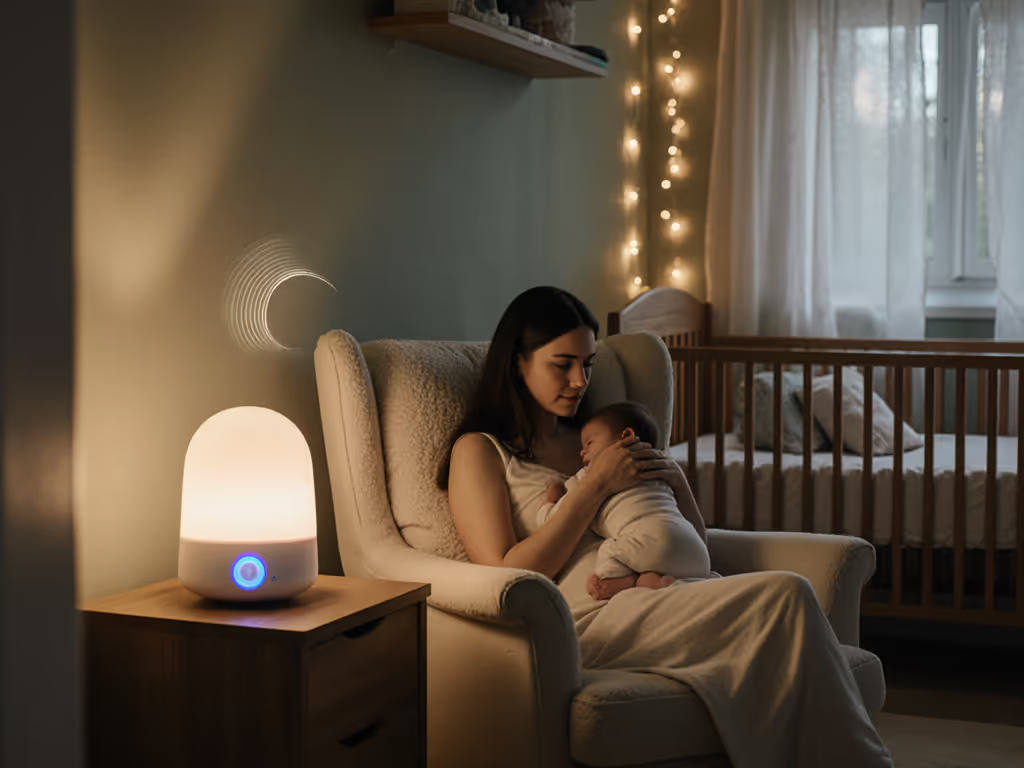
If you're a nursing parent navigating nighttime wakings and fragmented naps, you've likely heard conflicting advice about breastfeeding sleep cycles and whether a sound machine will help or hurt. The truth is more nuanced: your baby's waking patterns are biologically normal, your own hormones are already working to help you both fall back asleep faster, and the right environmental sound, set at a safe, measured level and held consistent, can smooth the process without creating dependency. This guide translates the science into repeatable steps and checklists so you can set up a nursing mother sound solution tailored to your room, your baby's age, and your family's daily realities.
Understanding Breastfed Sleep: Why Sound Matters
Breastfeeding changes everything about infant sleep, and not always in the way people assume. Research confirms that breastfed babies do wake more often during the night and have shorter sleep bouts than their formula-fed peers, largely because breastmilk is easier to digest and requires more frequent feeds (typically 8-12 times daily for newborns)[1]. However, breastfeeding mothers often get the same amount of sleep or more overall than formula-feeding mothers, thanks to the calming hormones (prolactin, oxytocin, and melatonin) released during feeds that help both baby and parent fall back asleep quickly[1][2].
What many parents don't expect is this: those nighttime feeds are designed to happen. Your prolactin levels surge between 1 a.m. and 5 a.m., and frequent night feeds during this window strengthen your milk supply for months to come[5]. Your baby's waking, in other words, is not a problem to eliminate. It is a signal to honor.
That said, environmental noise matters. Your baby's developing brain is learning to distinguish day from night, and unpredictable sounds (a dog bark, hallway traffic, a sibling's bedroom door) can fragment already light sleep cycles even more. Consistent, measured background sound (white noise, pink noise, or brown noise at a safe decibel level) masks those intrusions without overstimulating. The key is consistency plus measured settings: the same sound, at the same volume, in the same location, night after night. This builds a sleep cue as reliable as a bedtime routine.
The Biology Behind Breastfeeding Sleep Cycles
Newborn babies typically sleep 14-17 hours per day, but that sleep arrives in cycles of 30-70 minutes, often interrupted by feeding[3]. It's completely normal for infants to wake between sleep cycles, sometimes after just one or two; research shows that only about 1 in 3 babies experience consolidated sleep by three to four months[1]. Cluster feeding (frequent, close-together feeds in the late evening) is also normal and is often driven by evening milk that gradually increases in fat content, naturally satisfying baby enough for a longer first stretch of sleep[4].
Your breastmilk at night contains elevated levels of tryptophan, an amino acid that helps your baby produce melatonin, which in turn develops their circadian rhythm and supports deeper sleep[4]. This means your 2 a.m. feed is not a setback; it's a biological opportunity. When you feed without fully waking, your body releases hormones that send you back to sleep faster than your formula-feeding neighbor who must get up, prepare a bottle, and soothe a more alert baby[2].
Step-by-Step: Setting Up a Nursery Sound Environment
Step 1: Measure Your Room Baseline and Noise Sources
Before choosing a sound solution, understand what you're masking. Spend one evening in your nursery or shared sleep space at night (the time your baby sleeps) and listen. What intrudes most: hallway noise, outside traffic, a parent's snoring, a sibling's room, appliances?
If you have access to a smartphone sound-level app (or a simple decibel meter), record the ambient noise in your room. Don't worry about perfect accuracy; the goal is order of magnitude. Is it a whisper (30 dBA), normal conversation (60 dBA), a busy office (70 dBA)? Most nurseries sit around 50-60 dBA with periodic spikes.
Step 2: Choose a Sound Type Aligned to Your Primary Noise
Not all sound machines deliver the same frequency balance. The three most common profiles:
- White noise: Equal energy across all frequencies. Good for general masking and travel; can sound a bit harsh to some ears at moderate volumes.
- Pink noise: Emphasis on lower frequencies; softer, more soothing than white noise. Excellent for masking traffic and HVAC rumble.
- Brown noise: Even heavier bass emphasis. Closest to a distant thunderstorm or ocean; very calming but overkill for small rooms.
If your primary intrusion is outside traffic or hallway rumble, pink or brown noise will do the work at lower volume. If your noise is more varied (nearby voices, sibling activity), white noise covers more ground. My own trial with my cousin's twins in a cramped shared room proved this: we used pink noise at a steady 44 dBA and taped a simple checklist to the dresser so every caregiver (me, my cousin, the occasional babysitter) used identical settings. Over two weeks, that consistency alone transformed anxious nights into routines both kids recognized and relied on. Measured settings, repeated faithfully, work. For a deeper dive into white, pink, and brown noise for newborns and when to choose each, see our safe sound selection guide.
Step 3: Set Safe Volume at Crib Distance
This is where most parents feel lost. Manufacturers often list overall decibel output, but what matters is the sound level at your baby's ear, not across the room.
Safe target range: 45-55 dBA at crib distance, with an absolute ceiling of 60 dBA (equivalent to normal conversation). Below 45 dBA, the mask effect weakens, especially against sudden loud noises. Above 60 dBA risks cumulative hearing damage over months.
If your device has a volume dial or slider, start at the lowest setting and move your phone's sound-level app close to where your baby's head will be (not right at their ear, but six inches away). Gradually increase volume until you hear the background noise reduced but not eliminated. Your goal is for sudden sounds to be muffled, not vanished; complete silence teaches your baby's brain nothing about self-soothing through minor disruption. Set it once, repeat nightly. Write the volume position or number on a sticky note on the device itself if it doesn't have a memory function.
Step 4: Position the Device for Even Coverage
Placement profoundly affects perceived volume and frequency response:
- Across the room (3-4 feet away): Mimics gentle background ambiance; better for shared rooms where you don't want the sound too prominent.
- Closet or corner: Softens peaks and creates a more diffuse soundscape; useful if the device has harsh-sounding highs.
- Avoid direct line-of-sight to baby's head: Angled placement reduces acoustic pressure at the crib.
Once you've found the sweet spot, mark it (tape on the floor, a note on the device). Consistency in placement means consistency in heard volume and tone, another behavioral anchor for your baby.
Practical Checklists for Real-World Scenarios
For Single-Baby Nursery
- Device selected and positioned 3-4 feet from crib
- Volume set and noted (target: 45-55 dBA at crib)
- Sound type chosen (pink or brown noise if traffic is the main issue; white noise for mixed noise)
- Device tested for auto-restart if power drops
- Low-light indicator checked (avoid bright LEDs that signal through eyelids)
- Phone reminder set to confirm settings weekly; recheck volume if device is moved
For Shared-Room or Co-Sleeping Setup
- Device positioned near baby but not at parental head height (avoid adults dozing through the sound and missing baby's cries)
- Volume lower than single-nursery (aim 40-50 dBA to preserve parents' ability to hear baby clearly)
- Sound type chosen to mask sibling or environmental noise without disrupting parental sleep
- Consider two small devices: one near baby, one between siblings, if older child and infant share a room
- Test: have one parent listen from the parent bed to confirm baby cries still break through Need model suggestions? See our shared-room sound machine picks.
For Travel and Daycare
- Device is compact and battery-powered, or USB-C rechargeable with long runtime (8+ hours)
- Settings are not app-dependent; simple one-knob or preset buttons only
- Device holds memory across power cycles; if not, write settings on a card to carry
- Volume tested in hotel rooms, daycare nap space, and car before relying on it
- Pack a small decibel app and spend 5 minutes confirming at-crib volume on arrival For portable options that hold up outside the nursery, check our crib-safe travel sound machines.
Addressing Common Concerns
"Won't sound machines create a sleep crutch?" Infants naturally outgrow reliance on white noise around age 3-4, just as they eventually do not need the breast to fall asleep. Sound machines do not train babies to be dependent; they simply smooth the sleep environment during a phase when brain development is still happening. The real risk is inconsistency: changing volumes, moving the device, or switching sounds nightly. Consistency (the same setting, every night) is what gives your baby's brain permission to relax.
"Are there frequencies or volumes I should avoid?" Yes. Avoid harsh, piercing highs (above 4 kHz) at high volumes; these can startle rather than soothe. Avoid ultrasonic claims (manufacturers sometimes mislead about devices emitting "silent" ultrasonic frequencies that are beneficial) because these are not suitable for infants, and evidence does not support their safety. Stick to audible, measured sound in the 45-55 dBA range.
"What if I'm using white noise to mask my own snoring or partner's TV?" Absolutely valid. A sound machine in the shared room protects your nursing baby and your own sleep rhythm. Just ensure the volume at baby's head is still in safe range; position and test before committing.
Next Steps: Your Setup Action Plan
Start here:
- Spend one evening listening to your sleep space; identify the loudest intrusions.
- Choose a sound type (pink noise is the safest bet for most homes and babies).
- Select a simple, one-knob or preset device (no apps, no Wi-Fi, no unnecessary features).
- Measure volume at crib using a smartphone app, targeting 50 dBA as a first checkpoint.
- Mark the device and placement with tape or a note so every caregiver repeats the same setting.
- Track for two weeks: write down baby's sleep stretches each night. Most families see smoother patterns within a week once settings stabilize.
Consistency at safe volumes beats novelty. When you set a routine and repeat it nightly, your baby's developing brain learns to recognize the cue and settle into sleep. That confidence (knowing you've measured, set, and held the line) transforms anxious nights into manageable rhythm.
Your breastfeeding hormones are already working in your favor. Let a measured, consistent sound environment do the rest. Set it once, repeat nightly, and watch the difference.
Related Articles