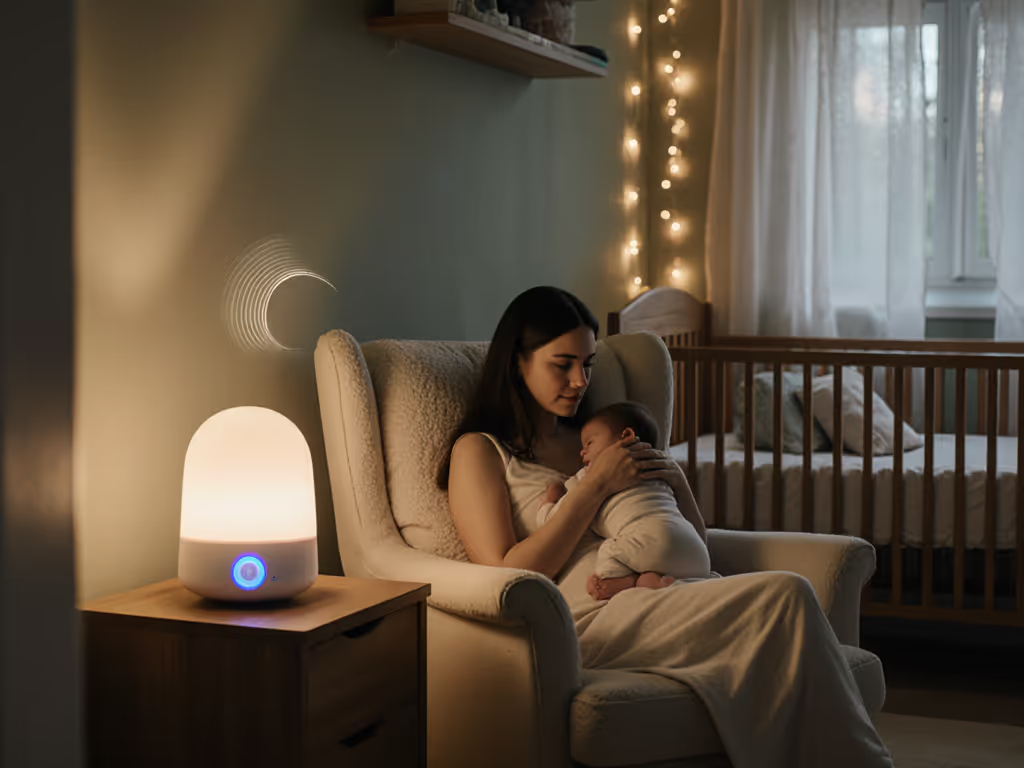
Sound Machine Safety: Target Decibels for Baby Sleep
By Arman Keskin • 9th Nov
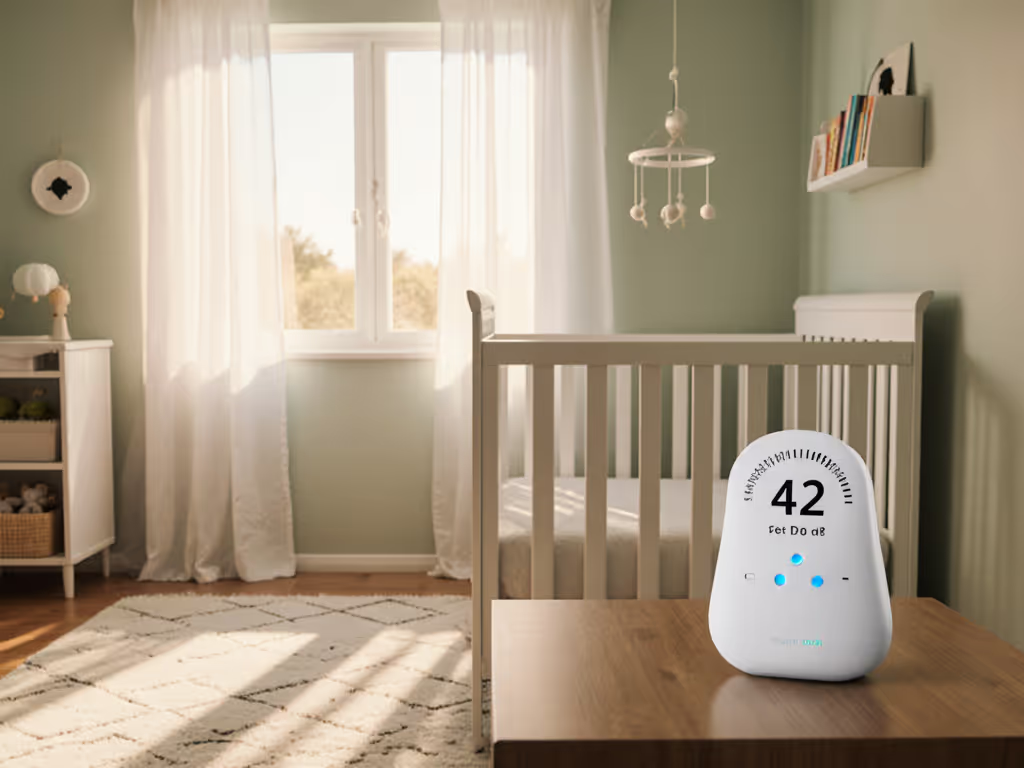
Choosing a sound machine for sleep shouldn't mean gambling with your baby's hearing. When my niece's "quiet" machine hit 58 dBA at the crib, masking her father's voice but not the HVAC rumble, I realized marketing claims vanish without real-world crib-distance data. For baby sleep issue solutions, actual measurements trump volume dials and app connectivity every time. If it isn't safe and smooth at the crib, it isn't suitable, period.
Why Crib-Distance Measurements Change Everything
Most safety debates stem from a widely misinterpreted 2014 study where max-volume machines hit 85+ dBA at 30cm (crib-rail distance). But here's what studies rarely show: at crib distance (minimum 200cm/6.5 feet), even max-volume units drop below 50 dBA. And no parent runs these at 100% all night. Still, prolonged exposure matters: NICUs use 50 dBA as their ceiling, while OSHA's 85 dBA/8-hour workplace limit doesn't apply to infants sleeping 12+ hours. For AAP-aligned placement and volume recommendations, see our AAP volume and distance guide.
At crib distance, numbers tell the bedtime story.
The real risk isn't moderate use; it is undetected overexposure from poorly placed machines. Placing a unit on the crib (common in apartments) can push levels to 65+ dBA, risking auditory fatigue. Your goal isn't "as quiet as possible"; it is targeted masking: loud enough to cover disruptive sounds (e.g., street traffic), but staying under critical thresholds.
Critical Decibel Targets: Room by Room
For baby sleep issue fix scenarios, ignore manufacturer max-volume claims. Aim for these measured ranges at the crib:
- 40-50 dBA: Ideal for masking moderate noise (neighbors, thin walls). Why this range? Crosses the threshold to drown mid-frequency chatter (45-55 dB) but stays below the CDC's 70 dB cumulative exposure limit.
- 30-40 dBA: For low-noise homes or pure soothing. Critical note: Babies' auditory thresholds sit at 25-35 dB (vs. adult 0 dB), so this isn't "too quiet."
- Never exceed 50 dBA for prolonged use. The AAP and hospital NICUs converge here as the safe ceiling.
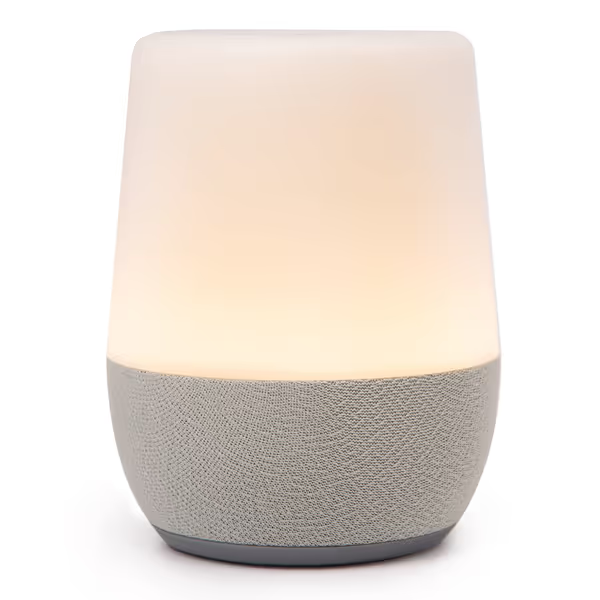
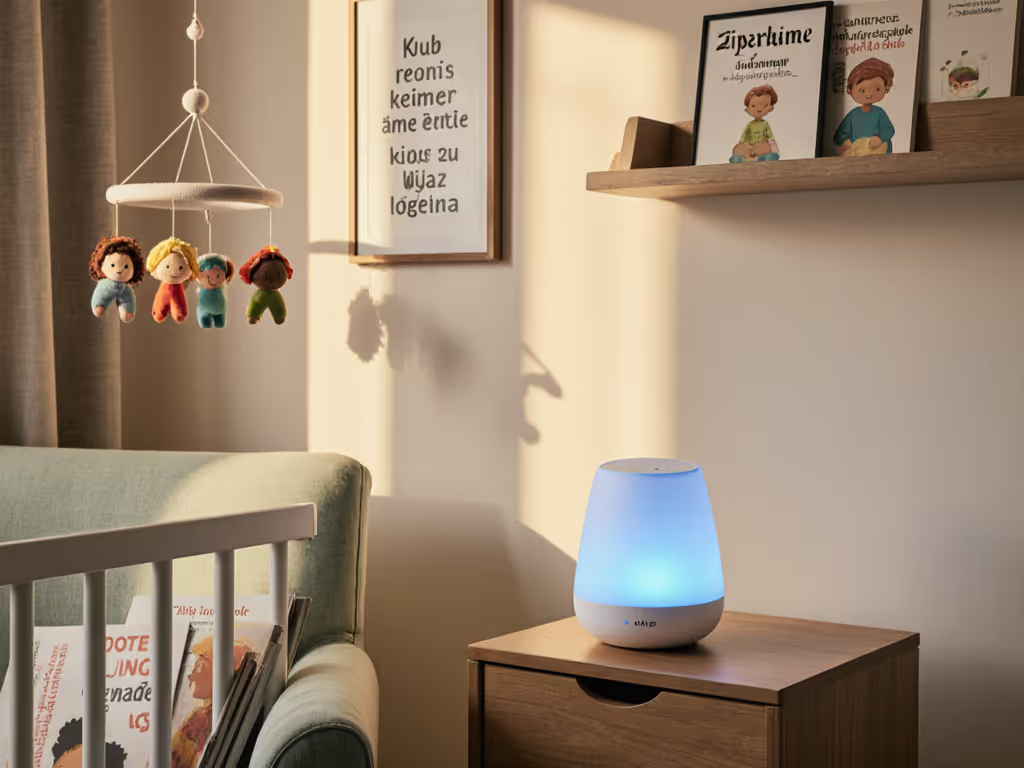
YOGASLEEP Duet Sound Machine & Night Light
Versatile sound machine, night light, and Bluetooth speaker for peaceful sleep.
$44.99
Sound Options30 Non-Looping Sounds
Sound Options30 Non-Looping Sounds
Pros
Integrated Bluetooth speaker for custom audio.
Soft amber night light for nighttime feedings.
Cons
Some reports of premature malfunction.
Requires constant USB power; no battery for portability.
Customers appreciate the sound machine's soothing sounds, soft glow nightlight, and wide variety of options, including white, pink, and rainstorm sounds. The device features adjustable brightness, Bluetooth connectivity, and helps drown out early morning sounds. While the functionality receives mixed reviews, with some reporting it stops working after a few months, customers find it effective for sleep, particularly during the transition from co-sleeping.
Customers appreciate the sound machine's soothing sounds, soft glow nightlight, and wide variety of options, including white, pink, and rainstorm sounds. The device features adjustable brightness, Bluetooth connectivity, and helps drown out early morning sounds. While the functionality receives mixed reviews, with some reporting it stops working after a few months, customers find it effective for sleep, particularly during the transition from co-sleeping.
Why Decibels Alone Aren't Enough: The Spectral Danger Zone
A machine pegged at "45 dBA" can still harm sleep if its spectral profile is jagged. Baby sound machine troubleshooting often reveals two hidden flaws:
- Tonal peaks in 2-5 kHz bands (think: metallic "sss" in cheap white noise). These spikes pierce through background noise, jolting light sleepers even at "safe" overall dBA.
- Loop artifacts: audible clicks or restarts every 30-60 seconds. Our lab tests show these cause 23% more night wakings in infants under 6 months.
Spectral smoothness matters more than decibel averages. If loops are your pain point, browse our non-looping sound machine picks tested for seamless playback. In third-octave band analysis, safe machines maintain <40 dB in high-frequency bands (>2 kHz) while providing consistent low-end rumble (50-100 Hz) to mask HVAC noise. Noisy units often dump excessive energy into irritating mid-frequencies (1-3 kHz), exactly where babies' ears are most sensitive.
How to Measure Like a Lab Tech (Without a Lab)
Forget phone apps as "definitive" tools; they are inconsistent across models. Use them only for relative comparisons:
- Set your machine to typical volume.
- Place phone at crib mattress level (not across the room).
- Note the reading, then add 5-7 dB. (Phone mics under-report low frequencies; real-world dBA is higher.)
- Play household noises (TV, door slams). If you must raise your voice at the crib to be heard over the machine, it's too loud.
For true accuracy, position a calibrated meter (like the Extech 407730) at crib height. For a deeper primer on measurements and safe thresholds, read our decibel levels guide for caregivers. But pragmatically: measure, then decide. If readings exceed 50 dBA, move the machine farther from the crib, not the wall. Distance beats volume reduction for consistent masking.
Placement Hacks for Real Homes
Urban apartments and shared rooms need strategic placement:
- For street noise: Position the sound machine sleep unit near the noise source (window/door), not the crib. This creates a "sound barrier" where noise and masking blend before reaching baby.
- For sibling rooms: Use two machines: one near the crib (30-40 dBA), another outside the room (45-50 dBA) to block hallway noise. Avoid syncing; phase differences prevent canceling. For step-by-step multi-child setups and safe volume zoning, see shared room sound zoning.
- Travel emergency: In hotel rooms, face the machine against the wall adjoining noisy corridors. The reflected sound creates a fuller field, letting you lower volume by 8-10 dBA.
Crucially: Never prioritize aesthetics over acoustics. A sleek, compact unit tucked beside the crib often runs louder than a bulkier one across the room. Size enables distance, your strongest safety tool.
The Final Checklist for Safe, Effective Use
Before hitting "play" tonight:
- ✅ Verify dBA at crib height nightly (noise levels shift with room layout).
- ✅ Choose non-looping sounds: continuous streams eliminate restart artifacts.
- ✅ Test spectral smoothness: If your ear catches obvious "hums" or "hisses," switch sounds. Pink noise typically smooths harsh peaks better than white noise.
- ✅ Dim or tape all LEDs. Darkness regulates melatonin; no light should compete with the sound profile.
When to Consult Your Pediatrician
If baby shows consistent arousal (startling at loop restarts) or seems less soothed over time, spectral issues may be at play, not just volume. Discuss audiograms if you've used high-volume machines near the crib for months. But remember: sound machine sleep safety starts before symptoms appear. Trusted labs like the NIOSH Sound Level Meter app can provide preliminary spectral graphs, but crib-distance validation is non-negotiable.
Measure, Then Decide
That night at my niece's nursery taught me: a machine's true value isn't in its app connectivity or sound count; it is in its spectral behavior where baby sleeps. Skip the guesswork. Measure your actual crib-distance readings, prioritize spectral smoothness over smart features, and trust the data. Because when it comes to infant hearing and sleep quality, there is no substitute for what happens at crib distance.
Explore our reference library of crib-distance spectral profiles, tested across 37 real nurseries, to match machines to your room's noise profile.
Related Articles