
Acoustic Benchmarks For Newborns: Essential Guide
By Hana Suzuki • 29th Oct
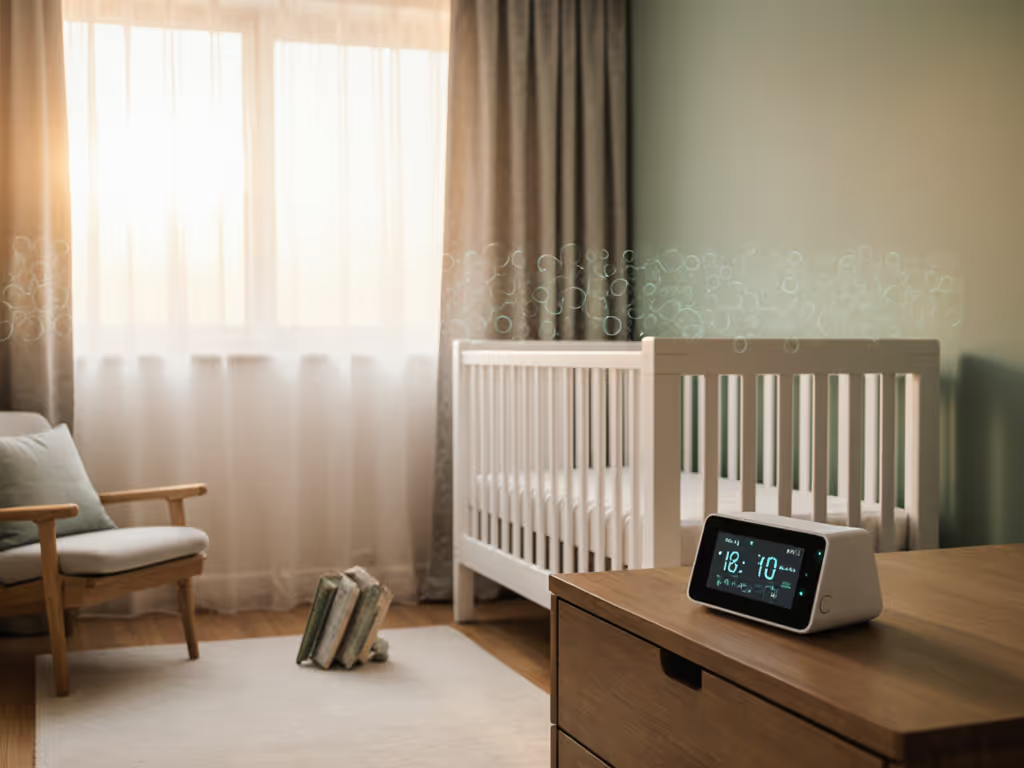
Did you know that newborns exposed to sounds above 45 decibels may face risks to their developing brains and hearing? Tiny ears are far more sensitive than adult ones, making careful sound management in hospitals and homes a real priority. By understanding what acoustic benchmarks mean for infants, parents and caregivers can protect fragile nervous systems and positively shape early developmental outcomes.
Key Takeaways
| Point | Details |
|---|---|
| Acoustic Benchmarks are Essential | Safe sound exposure levels for infants should not exceed 45 decibels (dB) to support healthy auditory and neurological development. |
| Impact of Noise on Newborns | Sustained sounds above 50 dB can stress infants and disrupt critical developmental processes. |
| Implementation of Sound Management | Parents should actively monitor and manage sound levels using specialized devices and sound-dampening techniques. |
| Avoid Common Safety Pitfalls | Misuse of sound monitoring equipment can compromise infant safety; proper placement and understanding of sound environments are crucial. |
What Acoustic Benchmarks Mean for Newborns
Acoustic benchmarks are scientifically established guidelines that define safe sound exposure levels for infants, particularly in medical and home environments. These precision measurements protect newborns from potential auditory and developmental risks by establishing maximum noise thresholds that prevent sensory overload and potential hearing damage.
The American Academy of Pediatrics (AAP) has rigorously defined these benchmarks, recommending that noise levels should not exceed 45 decibels (dB) in environments like neonatal intensive care units (NICUs). This precise standard helps healthcare professionals and parents create acoustic environments that support healthy infant neurological and auditory development. Sounds above this threshold can potentially disrupt critical developmental processes, interfere with sleep patterns, and cause unnecessary physiological stress.
Key considerations for understanding acoustic benchmarks include:
- Measurement in decibels (dB) as the standard unit of sound intensity
- Recognition that infant ears are significantly more sensitive than adult ears
- Understanding that prolonged exposure to high noise levels can impact neurological development
- Importance of creating calm, controlled acoustic environments
Implementing these acoustic benchmarks requires strategic sound management across various settings. Parents and caregivers can use specialized sound monitoring devices, choose quiet environments, and utilize sound-dampening techniques to maintain optimal acoustic conditions for newborns. By proactively managing sound exposure, we can create nurturing environments that support healthy infant growth and development.
Safe Decibel Levels Newborns Need
Decibel thresholds represent critical safety parameters for infant acoustic environments, defining precise sound intensity levels that protect newborns from potential developmental and auditory risks. Unlike adult hearing systems, infant ears are exceptionally delicate and require carefully managed sound exposure to prevent potential neurological and sensory disruptions.
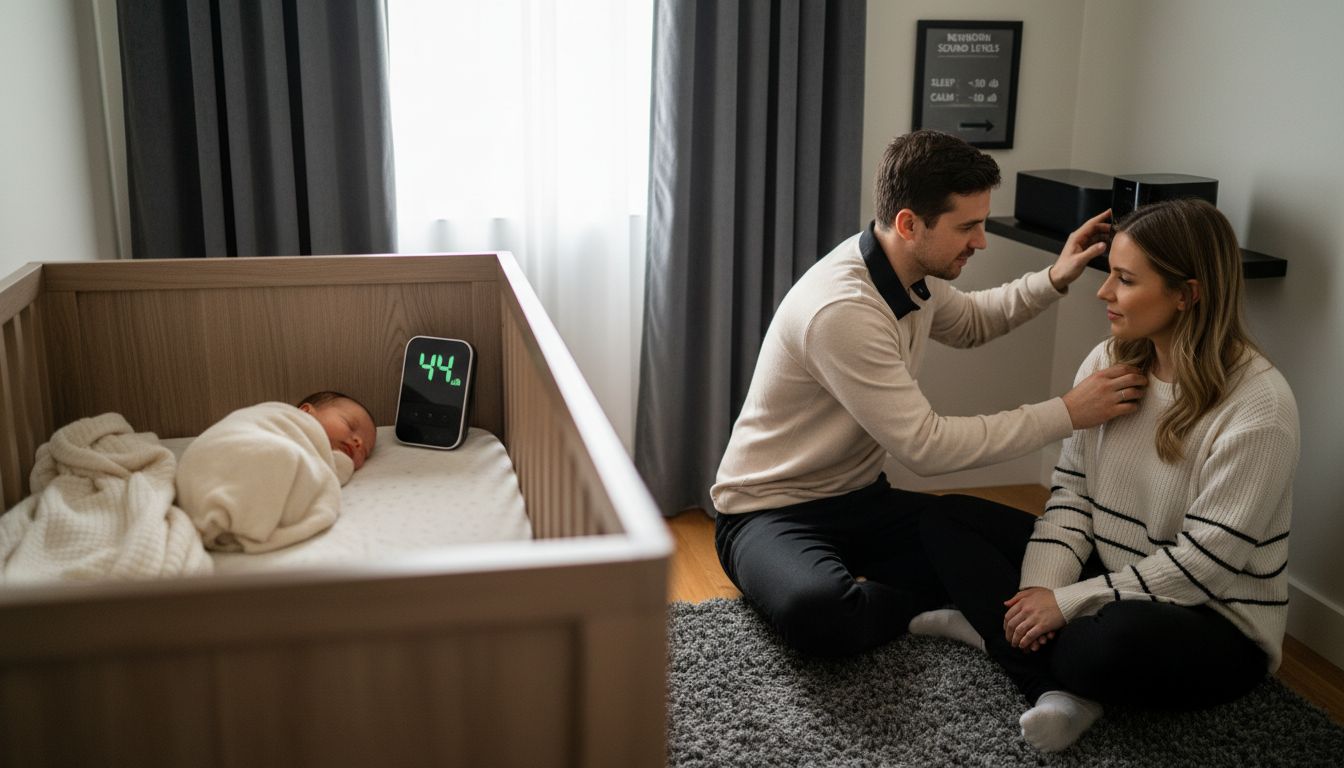
The American Academy of Pediatrics establishes a clear standard recommending that infant environments should not exceed 45 decibels (dB), equivalent to the soft sound of a quiet library or gentle whisper. This scientific benchmark helps parents and caregivers understand the nuanced acoustic needs of newborns, emphasizing that sound management is not just about volume reduction but about creating developmentally supportive environments.
Key considerations for safe decibel management include:
- Understanding that 50-60 dB can potentially stress infant nervous systems
- Recognizing that sustained loud noises can interrupt critical developmental processes
- Monitoring environmental sounds from household appliances, televisions, and conversations
- Implementing strategic sound reduction techniques in nurseries and sleep spaces
Practical strategies for maintaining safe sound levels involve active acoustic monitoring, using sound meters, selecting quieter household locations for infant sleeping areas, and creating consistent, low-noise environments. By proactively managing sound exposure, parents can help protect their newborns' sensitive auditory systems and support optimal neurological development during these critical early months.
Here's a summary of key decibel benchmarks and their effects on newborns:
| Sound Level (dB) | Example Environment | Impact on Newborns |
|---|---|---|
| ≤ 45 | Quiet library<br>Soft whisper | Safe<br>Supports healthy sleep |
| 46–50 | Typical conversation<br>Home | Near recommended maximum<br>Monitor exposure |
| 51–60 | Busy household<br>TV | Can induce stress<br>Affects sleep and development |
| 61+ | Loud appliances<br>City street | High risk<br>Potential hearing damage, disrupted development |
How Sound Levels Affect Infant Health
Acoustic environments play a critical role in newborn health, with sound levels directly impacting physiological and neurological development. Research demonstrates that excessive noise can trigger profound stress responses in infants, creating a cascade of potential health complications that extend far beyond immediate auditory concerns.
In neonatal intensive care units (NICUs), studies have revealed that elevated noise levels can cause significant physiological instability.
Specifically, research indicates that loud sounds can disrupt vital parameters such as heart rate, respiratory rate, and oxygen saturation levels. Preterm infants are particularly vulnerable, with noise-induced stress potentially compromising their delicate developmental processes and overall health stability.
Key health impacts of inappropriate sound levels include:
- Increased heart and respiratory rates
- Decreased oxygen saturation
- Potential long-term hearing impairment
- Disrupted sleep and rest cycles
- Elevated stress hormone production
- Potential neurological development interruptions
Mitigating these risks requires comprehensive acoustic management. Parents and healthcare providers must create carefully controlled sound environments that minimize stress and support optimal infant development. By understanding the intricate relationship between sound exposure and infant health, caregivers can proactively design environments that protect and nurture newborns during their most critical developmental stages.
Environmental Standards and Compliance
Acoustic environmental standards represent critical regulatory frameworks designed to protect newborns from potential sound-related health risks in medical and care settings. These meticulously developed guidelines provide comprehensive benchmarks that healthcare facilities and caregivers must follow to ensure optimal infant safety and developmental protection.
The American Academy of Pediatrics has established precise acoustic compliance standards for neonatal intensive care units (NICUs), specifying nuanced sound level measurements. Their recommendations include maintaining an hourly continuous sound level not exceeding 50 decibels (dB), with a maximum 1-second sound burst limited to 70 dB. These standards are not arbitrary but carefully calibrated to prevent potential physiological and neurological disruptions in vulnerable infant populations.
Key compliance considerations include:
- Continuous monitoring of sound intensity levels
- Regular acoustic environment assessments
- Implementation of sound-reduction technologies
- Training healthcare staff in acoustic management
- Using specialized sound measurement equipment
- Creating acoustic zones with differential noise restrictions
Implementing these environmental standards requires a multidisciplinary approach involving healthcare professionals, acoustic engineers, and infant development specialists. By adhering to these rigorous guidelines, medical facilities and caregivers can create scientifically optimized environments that minimize acoustic stress and support the critical developmental needs of newborns during their most vulnerable early stages.
Device Placement and Real‑Home Testing
Sound monitoring devices are critical tools for managing acoustic environments in infant spaces, requiring strategic placement and careful calibration to effectively protect newborns from potential auditory risks. Precise positioning and systematic testing transform these technological solutions from passive accessories into active guardians of infant developmental health.
Real-home testing involves comprehensive strategies that go beyond simple device placement, including identifying potential noise sources, mapping acoustic zones, and understanding how different household environments impact sound propagation. Professional acoustic testing requires parents and caregivers to systematically evaluate room acoustics, measuring sound levels at various points and understanding how furniture, wall materials, and household activities contribute to overall noise profiles.
Key considerations for effective device placement include:
- Maintaining recommended distance from infant sleeping areas
- Avoiding direct sound reflection surfaces
- Positioning devices at optimal height for accurate measurements
- Ensuring unobstructed sound capture
- Accounting for potential interference from electrical equipment
- Regularly calibrating and verifying device accuracy
Successful real-home acoustic management demands a proactive, scientific approach. By combining professional-grade sound monitoring devices, strategic placement techniques, and consistent environmental assessment, caregivers can create precisely controlled acoustic environments that support optimal infant neurological and auditory development.
Common Misuses and Safety Pitfalls
Acoustic safety for newborns involves more than simply purchasing monitoring equipment. Many well-intentioned parents unknowingly create potentially harmful sound environments by misunderstanding the nuanced requirements of infant auditory protection. These common misconceptions can lead to unintended developmental risks that compromise an infant's sensitive neurological systems.
In neonatal and home settings, critical safety pitfalls frequently emerge from inadequate noise monitoring and control. Research demonstrates that failing to systematically manage environmental sound levels can trigger physiological stress responses in infants. Common mistakes include placing sound machines too close to cribs, using inappropriate noise frequencies, or maintaining inconsistent acoustic environments that disrupt critical developmental processes.
Key misuse areas to avoid include:
- Positioning sound devices directly near infant sleeping spaces
- Using white noise at maximum volume settings
- Neglecting regular acoustic environment assessments
- Assuming all sound machines are equally safe
- Overlooking potential electromagnetic interference
- Failing to understand frequency sensitivity differences
Preventing these safety pitfalls requires a proactive, scientifically informed approach. Parents and caregivers must continuously educate themselves, regularly assess acoustic environments, and remain vigilant about potential sound-related risks. By understanding the intricate relationship between acoustic exposure and infant development, families can create nurturing, scientifically optimized sound environments that support healthy neurological growth.
Protect Your Newborn with Trusted Acoustic Solutions
Understanding the importance of strict acoustic benchmarks is essential to safeguarding your newborn's delicate hearing and neurological development. The challenge many parents face is ensuring sound levels stay at or below the recommended 45 decibel limit while avoiding common pitfalls like improper device placement or inconsistent sound environments. Key terms like "decibel thresholds," "sound monitoring devices," and "acoustic environment assessments" reflect the precise care newborns need.
Our Acoustic Lab for Little Ears at Baby Sound Machines blends rigorous lab-tested decibel profiles with real-home environment data to help you choose the safest sound machines. By relying on our scientific approach, you avoid guesswork, prevent unnecessary stress for your infant, and create nurturing low-noise spaces. Ready to ensure your baby’s hearing and development are protected today? Explore our carefully selected sound machines and get expert guidance tailored to your home. Do not wait until noise disrupts precious sleep. Visit Baby Sound Machines now to find your perfect sound solution.
Frequently Asked Questions
What are acoustic benchmarks for newborns?
Acoustic benchmarks are scientifically established guidelines that define safe sound exposure levels for infants, protecting them from auditory and developmental risks.
Why is it important to monitor sound levels around newborns?
Monitoring sound levels is crucial because excessive noise can lead to physiological stress, disrupt sleep, and hinder neurological development in newborns, making it essential for their health and safety.
What sound levels should be maintained in environments for newborns?
The American Academy of Pediatrics recommends that noise levels should not exceed 45 decibels (dB) in environments for newborns, such as neonatal intensive care units and homes.
How can parents manage sound exposure for their newborns effectively?
Parents can manage sound exposure by using sound monitoring devices, opting for quieter environments, implementing sound-dampening techniques, and regularly assessing noise levels to create a calm, supportive atmosphere.
Related Articles