
Step by Step Sleep Safety Guide for Peaceful Nights
By Diego Martins • 5th Nov
Over 3,500 sleep-related infant deaths occur each year in the United States. That number highlights how crucial a secure sleep environment is for your baby’s well-being. Small hazards or overlooked details in your infant’s sleep space can lead to serious risks. With careful preparation and the right products, you can create a peaceful, safe haven that supports healthy growth and provides you with peace of mind.
Quick Summary
| Key Point | Explanation |
|---|---|
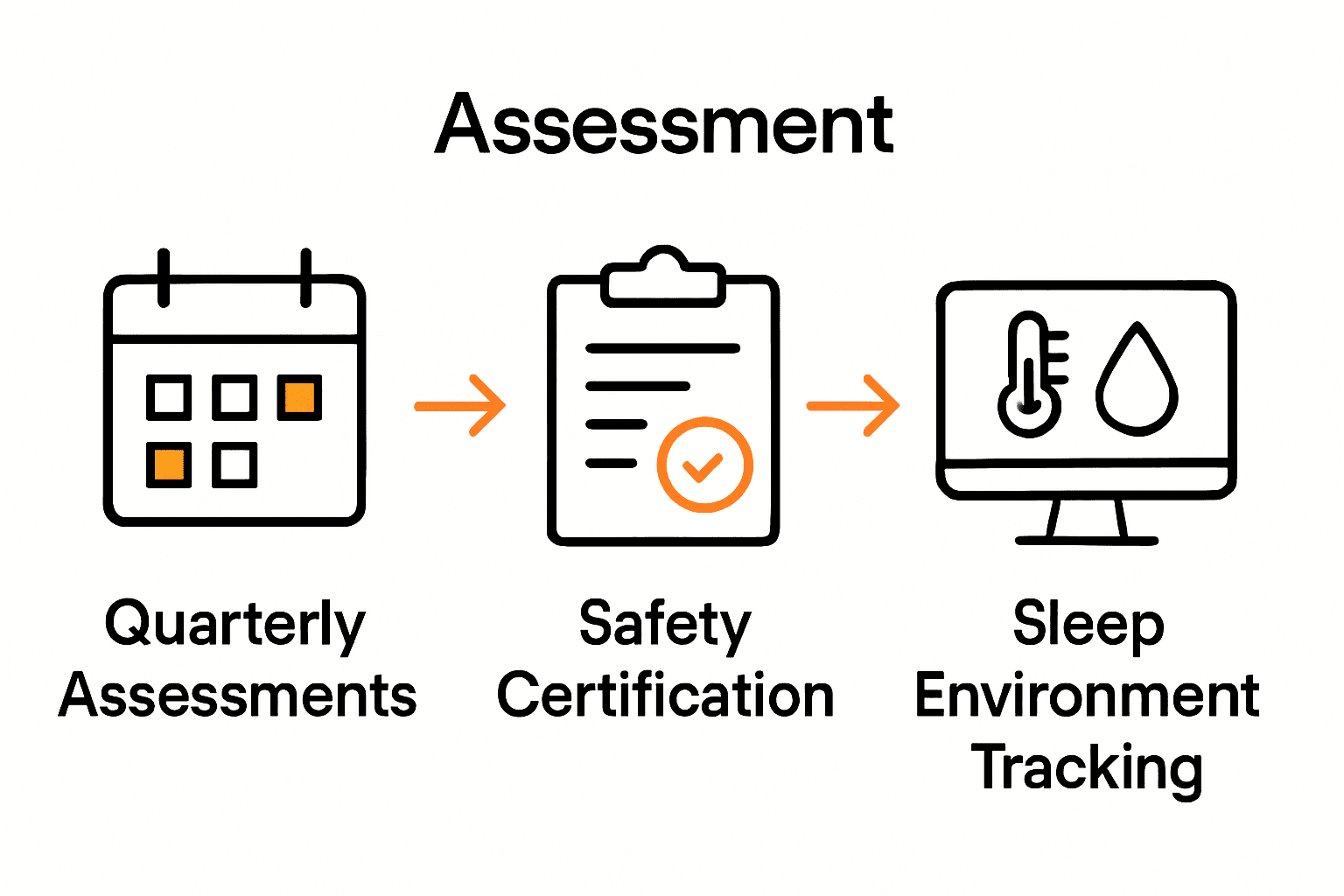
| 1. Conduct a safety assessment quarterly | Regularly evaluate the sleep environment as your infant becomes more mobile to identify new hazards. |
| 2. Choose certified safe sleep products | Opt for items meeting strict safety standards and avoid secondhand products to ensure structural safety. |
| 3. Manage noise and light effectively | Use blackout curtains and sound-absorbing materials to create an ideal sleep environment that minimizes disruptions. |
| 4. Monitor sleeping conditions continuously | Implement technology and regular inspections to track and assess the safety of the sleep environment dynamically. |
| 5. Document safety observations regularly | Keep a dedicated safety log to track and review environmental conditions and your infant's sleep patterns for better insights. |
 |
|
Step 1: Assess current sleep environment for hazards
Your infant's sleep space requires a comprehensive safety assessment that goes beyond basic cleaning and organization. Think of this walkthrough as creating a protective shield around your little one's most vulnerable moments of rest. The goal is to methodically evaluate every potential risk lurking in the sleep environment and proactively eliminate hazards before they become dangerous.
Start with a systematic room scan focusing on four critical zones: the sleep surface, surrounding area, electrical components, and potential fall risks. Examine the crib or sleep surface first. Ensure the mattress fits snugly with no gaps larger than two fingers width along the edges. Remove all soft bedding including pillows, blankets, bumper pads, and stuffed animals that could pose suffocation risks. The U.S. Consumer Product Safety Commission strongly recommends keeping sleep areas clear of soft objects to prevent potential suffocation.
Move your inspection to the room's perimeter. Check for unstable furniture that could tip if pulled, secure window blind cords out of reach, and confirm electrical outlets have protective covers. Anchor tall furniture like dressers and bookcases to wall studs to prevent potential tipping accidents. Place cribs away from windows, heaters, long curtains, and hanging decorations that an active infant might grab or become entangled with. A single overlooked hazard can transform a peaceful sleep environment into a dangerous scenario.
Pro Tip: Conduct this safety assessment quarterly as your infant becomes more mobile and curious. What seems safe at 2 months might become a risk at 8 months.
Once you complete your environmental safety check, you will have created a secure sleeping sanctuary that minimizes risks and supports peaceful rest. The next step involves understanding sound management and noise levels in this carefully prepared space.
Step 2: Select supportive and safe sleep products
Choosing the right sleep products is your strategic defense against potential safety risks for your infant. This step transforms product selection from a simple shopping task into a deliberate safety mission that protects your little one during their most vulnerable moments of rest.
Prioritize products that meet stringent safety standards established by recognized authorities. The Eunice Kennedy Shriver National Institute of Child Health and Human Development recommends selecting items specifically designed to reduce sleep related risks. When evaluating cribs, mattresses, and sleep accessories, inspect for current certification marks from recognized safety organizations. Look for a firm mattress that fits snugly within the crib frame with no more than two fingers width of space between the mattress edge and crib wall. Avoid secondhand sleep equipment that might have hidden structural weaknesses or outdated safety designs.
Navigate beyond basic aesthetics and focus on functional safety features. Examine product construction for smooth edges, secure fastening mechanisms, and absence of small detachable parts. Ensure cribs have fixed sides with robust railings that prevent accidental falls. Verify that any additional sleep accessories like swaddles or sleep sacks conform to recommended safety guidelines.
 Portable sleep solutions such as travel cribs or bassinets should also undergo the same rigorous inspection process.
Pro Tip: Always register your baby products with the manufacturer to receive critical safety updates and recall notifications.
By methodically selecting sleep products that prioritize safety, you create a protective environment that supports your infant's healthy development. Your next step involves understanding how to optimize these carefully chosen products for maximum safety and comfort.
Step 3: Set up the sleeping area to minimize noise and light
Creating an optimal sleep environment requires strategic management of sensory inputs that can disrupt your infant's rest. Your mission is to transform the sleep space into a carefully controlled sanctuary that promotes uninterrupted and peaceful slumber.
Begin with light management by installing blackout curtains or cellular shades that effectively block external illumination. Research exploring ambient sleep conditions demonstrates how light exposure can significantly impact sleep quality. Position window coverings to eliminate direct light streams and create a consistently dark environment during sleep times. Consider using soft amber or red colored night lights if minimal illumination is necessary these lights minimize melatonin disruption compared to standard white or blue spectrum lighting.
Address noise control through multiple strategic approaches. Use sound absorbing materials like thick carpets rugs or acoustic panels to reduce environmental noise transmission. Position the sleep area away from high traffic zones external walls or noisy appliances. Consider white noise machines set at moderate volumes to create a consistent sound backdrop that masks potential disruptive background noises. Advanced sleep research suggests that consistent ambient sound can help regulate infant sleep patterns and create a more stable rest environment.
Pro Tip: Test your noise and light management setup during daytime hours to ensure complete sensory control before implementing it for actual sleep times.
By methodically engineering a controlled sleep environment you provide your infant with the optimal conditions for restorative rest. Your next step involves understanding how to monitor and adjust these carefully established sleep parameters.
Step 4: Test and monitor sleeping conditions for safety
Transforming your infant's sleep environment from theoretical preparation to a reliably safe space requires systematic testing and continuous monitoring. Your goal is to develop a proactive approach that anticipates potential risks and creates a responsive safety ecosystem around your little one's most vulnerable moments.
Utilize advanced monitoring technologies and practical observation techniques to establish a comprehensive safety assessment protocol. Contemporary research involving Thermal Sensor Arrays suggests innovative approaches to tracking environmental conditions. Invest in a high quality baby monitor with multiple sensing capabilities that can track room temperature, humidity levels, and sound patterns. Place the monitor strategically to provide full room coverage without creating additional hazards. Conduct periodic tests during different times of day and night to understand how environmental conditions fluctuate and potentially impact your infant's sleep safety.
Implement a methodical observation routine that goes beyond technological monitoring. Perform weekly physical inspections of the sleep area checking for potential new risks like loosened crib components unstable furniture or changes in room configuration. Document your observations in a dedicated safety log to track evolving conditions and identify potential emerging concerns. Pay special attention to your infant's physical responses temperature regulation and sleep patterns as these can provide critical insights into the effectiveness of your safety measures.
Pro Tip: Create a monthly safety review checklist that includes technological monitoring results physical environment assessment and your infant's sleep health indicators.
By establishing this dynamic and responsive monitoring approach you transform sleep safety from a static setup to an adaptive protective system. Your next step involves understanding how to integrate these monitoring insights into ongoing sleep environment management.
Elevate Your Baby's Sleep Safety with Data-Driven Sound Solutions
Ensuring your infant’s sleep environment is free from hazards means controlling more than just physical risks. The article highlights critical steps like minimizing noise and optimizing light to create a calm, secure sleep sanctuary. If managing sound levels and reducing disruptions feels overwhelming, you are not alone. Many parents seek reliable, science-backed ways to maintain stable ambient noise that supports deeper sleep and peace of mind.
This is where the expertise of Acoustic Lab for Little Ears becomes a vital asset. Our approach combines lab-measured decibel profiles with real-home testing to recommend the most effective sound machines and noise control solutions tailored to your child's unique sleep space. By integrating these sound strategies with the safety tips from the guide, you can foster an environment that truly nurtures your baby’s well-being.
Take action now to transform your infant’s sleep experience. Start by exploring our insights and product recommendations at baby sound machines then implement your personal safety plan with confidence. Your baby deserves a peaceful night backed by data and care that only our Acoustic Lab provides.
Frequently Asked Questions
How do I assess my infant's sleep environment for hazards?
To assess your infant's sleep environment, conduct a comprehensive safety check focusing on the sleep surface, surrounding area, electrical components, and potential fall risks. Inspect the crib, ensure the mattress fits securely, and remove any soft items that could pose suffocation risks.
What criteria should I use to select safe sleep products for my baby?
Choose sleep products that meet current safety standards and have proper certification marks. Ensure that cribs have fixed sides and a firm mattress fitting snugly with no gaps larger than two fingers between the mattress and crib walls.
How can I minimize noise and light in my baby's sleeping area?
To minimize noise and light, install blackout curtains to block external light and use thick rugs or acoustic panels to absorb sound. Consider using a white noise machine set at a moderate volume for consistent background sound that aids sleep.
What is the recommended way to test and monitor sleep conditions for safety?
Test sleep conditions by using a quality baby monitor that tracks room temperature and humidity levels. Perform weekly inspections of the sleep area to identify new risks, keeping a safety log to document any changes or concerns you observe.
How often should I review my infant's sleep safety setup?
Conduct a safety assessment of your infant's sleep environment quarterly, and implement a monthly safety review checklist to track changes in sleep conditions and your infant’s responses. This proactive approach helps you stay ahead of any potential hazards.
Related Articles