
Safe Sleep Explained: Reducing Infant Risk Everywhere
By Noor Al-Masri • 3rd Nov
Every year, over 3,400 infants die from sleep-related incidents in the United States alone. That number can feel overwhelming, especially when many of these tragedies are preventable with the right knowledge. Parents and caregivers often encounter conflicting advice and long-standing myths about safe sleep for babies. Recognizing the real dangers and proven practices matters, because even well-meaning mistakes can carry serious risks for the youngest members of your family.
Key Takeaways
| Point | Details |
|---|---|
| Back Positioning | Always place infants on their backs to significantly reduce the risk of SIDS and suffocation. |
| Firm Sleep Surfaces | Utilize a firm, flat crib mattress without soft bedding to prevent accidental covering and suffocation risks. |
| Clear Sleep Areas | Ensure sleep spaces are entirely free of loose items such as blankets, toys, and bumpers to minimize hazards. |
| Environment Control | Maintain a smoke-free environment and a comfortable room temperature between 68-72°F to support infant health and safety. |
Defining Safe Sleep and Common Myths
Safe infant sleep isn't just a recommendation - it's a critical practice that can mean the difference between life and death. Sudden Infant Death Syndrome (SIDS) claims hundreds of infant lives annually, making proper sleep positioning and environment essential for every caregiver. The National Institute of Child Health and Human Development (NICHD) provides clear guidelines that transform nursery practices from potentially dangerous to scientifically protective.
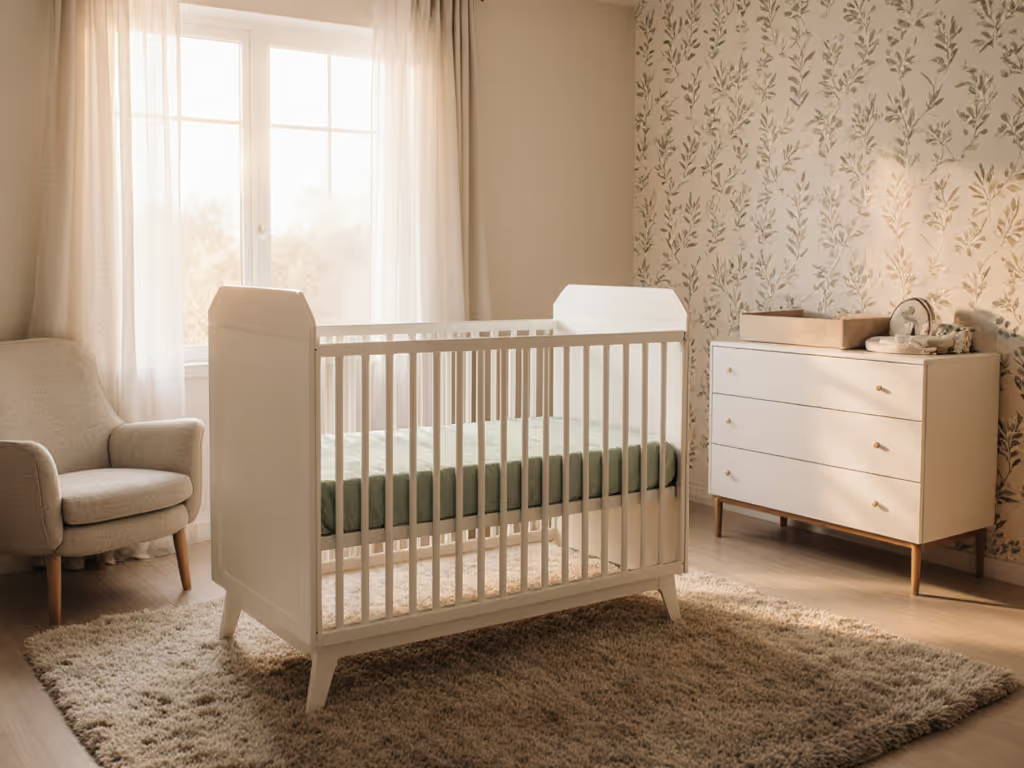
At its core, safe sleep involves three fundamental principles: back positioning, firm sleep surfaces, and clear sleeping areas. Babies should always be placed on their backs, not their sides or stomachs, which dramatically reduces suffocation and SIDS risks. The sleep surface must be firm - think rigid crib mattress, not plush pillow tops or soft bedding. Additionally, the sleep environment needs to be completely clear of loose blankets, stuffed animals, bumper pads, and other potential hazards that could obstruct breathing.
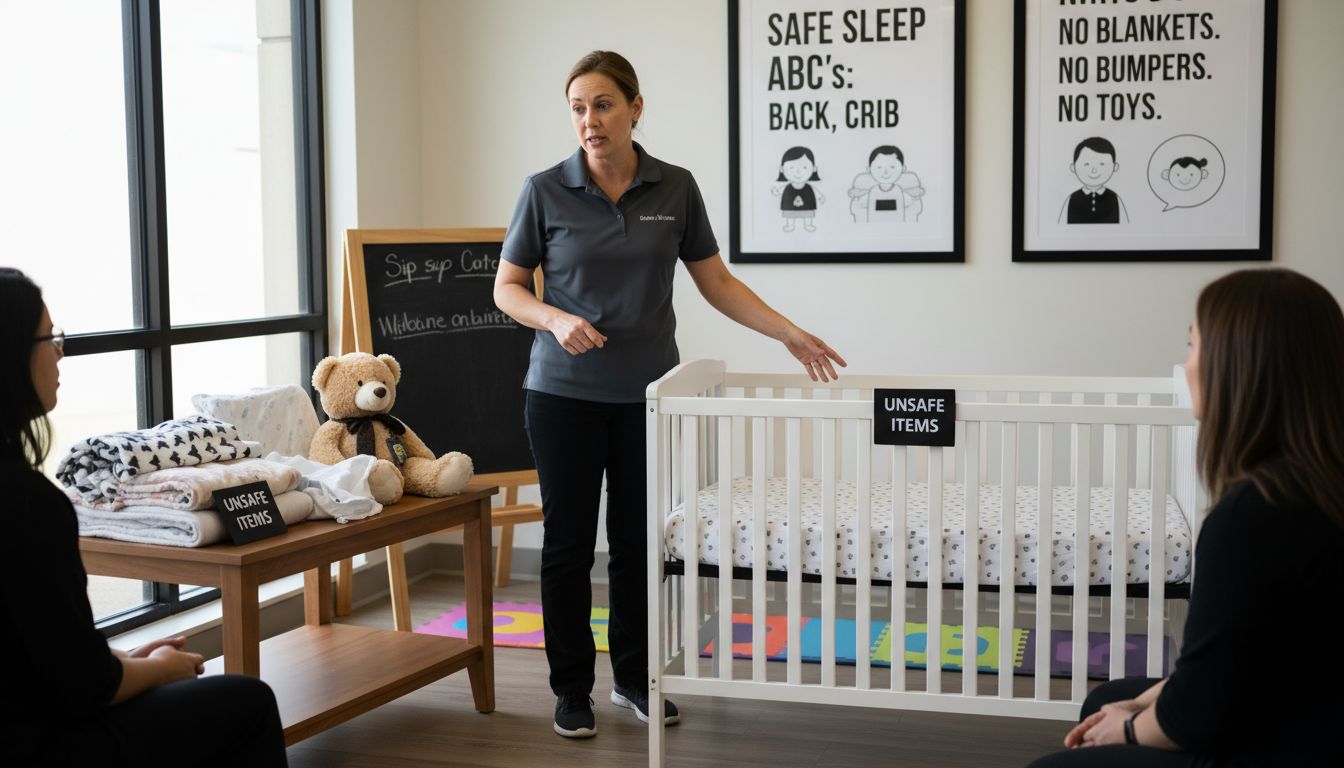
Here's a comparison of key safe sleep practices versus common unsafe myths:
| Practice or Belief | Safe Approach (Evidence-Based) | Unsafe Myth (What to Avoid) |
|---|---|---|
| Sleep Position | Back sleeping only | Side or stomach sleeping |
| Sleep Surface | Firm, flat crib mattress | Soft mattress<br>Pillow tops |
| Bedding | No soft items; tight sheet only | Blankets<br>Pillows<br>Stuffed animals |
| Sleep Area | Clear, clutter-free crib | Bumper pads<br>Toys in crib |
| Bed-Sharing | Room sharing, separate sleep space | Bed-sharing with adults |
| Smoke Exposure | 100% smoke-free environment | Any exposure to smoke or nicotine |
| Room Temperature | 68-72°F, not overheated | Overdressing<br>Warm rooms |
Many well-intentioned myths persist that can unknowingly endanger infants. Parents often believe side sleeping is safer or that extra bedding provides comfort, but these are dangerous misconceptions. The Centers for Disease Control (CDC) emphasizes that bed-sharing increases sleep-related infant death risks substantially. These myths aren't just misunderstandings - they're potential life-threatening errors that every caregiver must understand and reject.
- Back positioning reduces SIDS risk by up to 50%
- Firm sleep surfaces prevent suffocation risks
- Clear sleeping areas minimize accidental covering
Protecting your infant during sleep isn't about complicated strategies. It's about understanding basic, evidence-based practices that create the safest possible environment for your most vulnerable family member.

Key Safe Sleep Practices for Infants
Safe sleep practices are more than just recommendations - they are critical protocols that can literally save an infant's life. The National Institute of Child Health and Human Development (NICHD) has meticulously outlined guidelines that transform nursery environments from potentially dangerous spaces to scientifically protective zones. Understanding and implementing these practices isn't about perfection, but about creating consistently safe sleeping conditions for your most vulnerable family member.
The fundamental safe sleep roadmap involves several non-negotiable elements. Back positioning remains the gold standard - babies must always be placed on their backs, never on their sides or stomachs. The sleep surface should be firm, flat, and completely non-inclined, with a tight-fitting sheet as the only acceptable bedding. Cribs or sleep spaces must be entirely free of soft objects: no pillows, blankets, stuffed animals, or crib bumpers. These seemingly innocent items can create significant suffocation risks that many parents unknowingly introduce.
Beyond physical positioning, environmental factors play a crucial role in infant sleep safety. Room sharing is recommended, but bed-sharing is strictly prohibited. Maintaining a smoke-free environment is equally important, as nicotine exposure dramatically increases sleep-related infant death risks. Temperature control matters too - the room should be comfortable but not overheated, typically between 68-72 degrees Fahrenheit.
- Always place babies on their backs
- Use a firm, flat sleep surface
- Keep sleep areas completely clear of soft objects
- Maintain consistent room temperature
- Avoid smoke and nicotine exposure
Safe sleep isn't about complex strategies. It's about consistent, evidence-based practices that create a protective cocoon for your infant during their most vulnerable hours. Every sleep session is an opportunity to reinforce these critical safety protocols.
Risks Associated With Unsafe Sleep Environments
Infant sleep environments harbor hidden dangers that can transform a peaceful nursery into a potential life-threatening space. The National Institute of Child Health and Human Development (NICHD) warns that seemingly innocent sleeping arrangements can dramatically increase the risk of Sudden Infant Death Syndrome (SIDS), suffocation, and accidental infant death. Parents and caregivers might unknowingly create hazardous conditions without understanding the precise mechanisms of risk.
The most critical risk factors emerge from common misconceptions about infant sleeping arrangements. Soft surfaces like adult beds, couches, and plush mattresses create significant suffocation hazards. When infants are placed on these surfaces, they can easily become trapped, unable to move their heads, leading to restricted breathing. Loose bedding presents another substantial danger - blankets, pillows, and stuffed animals can inadvertently cover an infant's face, blocking airflow within seconds. Bed-sharing exponentially increases these risks, as adult bedding and mattress structures are fundamentally incompatible with infant safety requirements.
Beyond physical suffocation risks, environmental factors play a crucial role in infant sleep safety. Overheating can stress an infant's developing thermoregulation system, while smoking environments introduce toxic particulates that compromise respiratory health. The Centers for Disease Control emphasizes that these environmental risks are not theoretical - they represent tangible threats that can permanently alter an infant's health trajectory. Nicotine exposure, even secondhand, creates neurological and respiratory vulnerabilities that extend far beyond the immediate sleeping environment.
- 3,400 infants die annually from sleep-related incidents
- Soft surfaces increase suffocation risks by 67%
- Bed-sharing triples the risk of infant mortality
- Smoking near sleeping infants increases respiratory complications
Understanding these risks isn't about creating parental anxiety. It's about empowering caregivers with precise, actionable knowledge that can quite literally save an infant's life. Every sleeping moment is an opportunity to implement scientifically validated safety protocols.
Global Guidelines and Regional Differences
Infant sleep safety is a universal concern that transcends geographical boundaries, yet cultural nuances create significant variations in implementation and understanding. While core scientific principles remain consistent, how different societies interpret and apply safe sleep guidelines reveals fascinating global diversity. The fundamental recommendations from leading health organizations like the World Health Organization and national pediatric associations maintain striking similarities across continents.
Core global guidelines establish three non-negotiable principles: back sleeping positioning, firm sleep surfaces, and clear sleeping environments. However, cultural practices dramatically influence adherence and interpretation. For instance, in some Asian and African cultures, bed-sharing is deeply ingrained as a traditional childcare practice, directly challenging Western medical recommendations. These cultural differences aren't mere preferences - they represent complex interactions between traditional caregiving methods and emerging scientific understanding. Some regions demonstrate higher infant mortality rates precisely because local customs conflict with evidence-based sleep safety protocols.
Regional variations extend beyond sleeping positions into broader infant care practices. Socioeconomic factors significantly impact safe sleep implementation, with resource-limited environments facing unique challenges in creating optimal sleeping conditions. Economic constraints can mean limited access to recommended cribs, mattresses, and dedicated infant sleeping spaces. Developing nations often struggle with balancing traditional practices, economic realities, and emerging medical recommendations. Public health interventions must therefore be culturally sensitive, offering education that respects local contexts while gradually introducing scientifically validated safety practices.
- 80% of global pediatric organizations recommend back sleeping
- Cultural bed-sharing practices vary by over 60% globally
- Infant mortality rates correlate with safe sleep practice adherence
- Economic factors significantly impact sleep environment safety
Understanding global guidelines isn't about imposing uniform standards, but creating adaptable, culturally informed approaches that prioritize infant safety across diverse human experiences.
Common Mistakes and How to Avoid Them
Infant sleep safety is a minefield of well-intentioned but potentially dangerous mistakes that can catch even experienced parents off guard. The National Institute of Child Health and Human Development (NICHD) has documented numerous scenarios where seemingly harmless decisions can create life-threatening risks. Understanding these common errors isn't about inducing parental guilt, but about empowering caregivers with precise, actionable knowledge that can protect their most vulnerable family members.
The most prevalent mistakes revolve around sleep positioning and environment. Many parents still incorrectly believe that stomach or side sleeping is acceptable, when scientific evidence conclusively proves that back sleeping dramatically reduces Sudden Infant Death Syndrome (SIDS) risks. Soft bedding represents another critical error zone - blankets, pillows, and plush mattress toppers might seem comforting, but they create significant suffocation hazards. Parents often underestimate how quickly an infant can become trapped or have their breathing restricted by seemingly innocuous items. Bed-sharing, despite feeling intuitive to many cultures, exponentially increases infant mortality risks by creating multiple potential suffocation and entrapment scenarios.
Beyond positioning, environmental and care-related mistakes compound infant sleep risks. Overheating is a subtle but dangerous error many caregivers overlook. Dressing infants in too many layers or maintaining excessively warm rooms can stress an infant's developing thermoregulation system. Smoking environments - even secondhand exposure - introduce toxic particulates that compromise respiratory health. Additionally, inconsistent sleep practices create confusion and potential safety gaps. Grandparents, daycare providers, and other caregivers might inadvertently use different techniques, creating potentially dangerous variations in infant sleep management.
- 75% of SIDS deaths occur during unauthorized sleep positions
- Soft bedding increases suffocation risks by 20-fold
- Bed-sharing triples infant mortality risk
- Temperature variations can critically stress infant systems
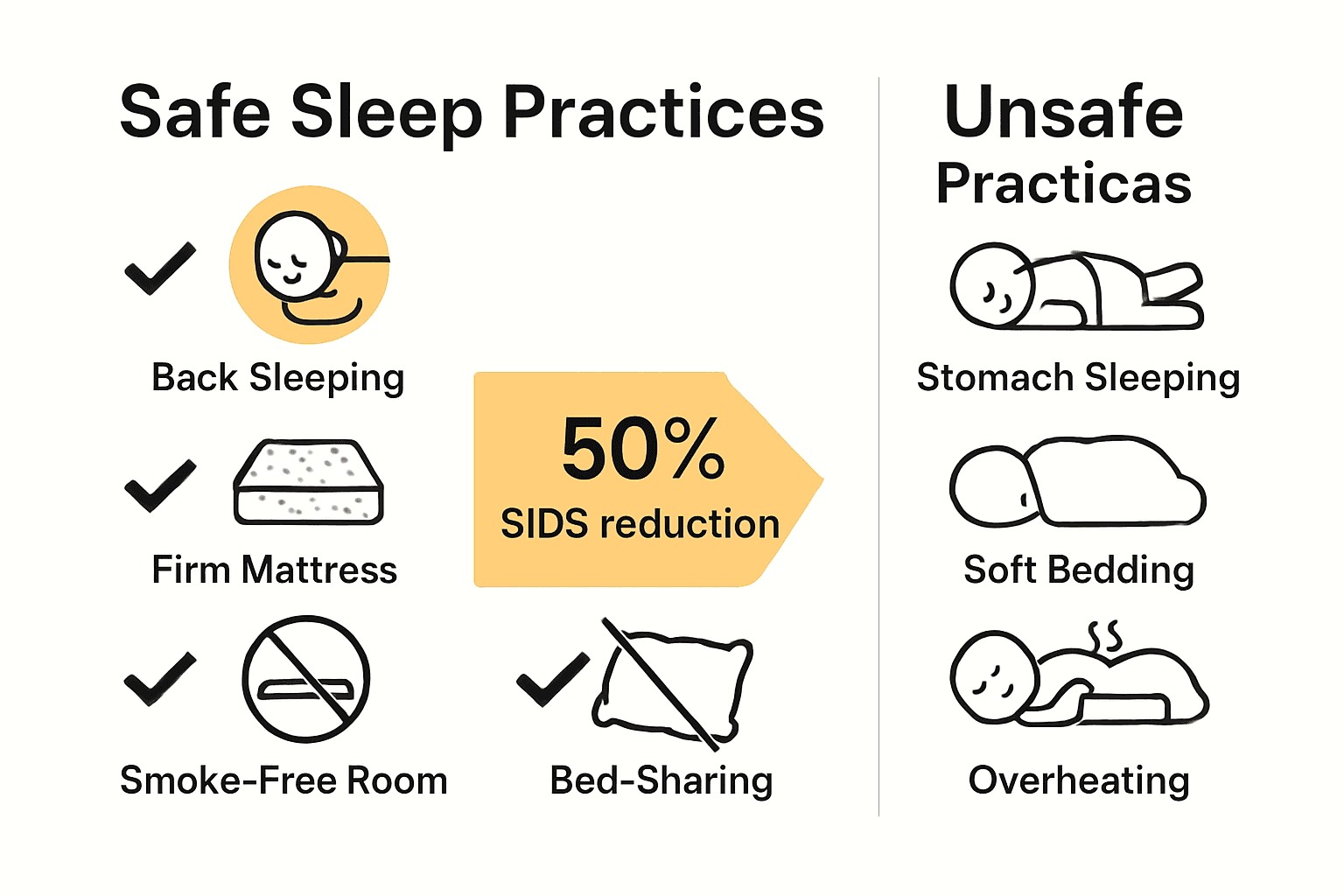
Avoiding these mistakes isn't about perfection - it's about consistent, informed care that prioritizes scientific understanding over intuition or tradition. Every sleep moment is an opportunity to implement life-saving protocols.
Create a Safe Sleep Environment with Confidence
Ensuring your baby sleeps safely involves more than just following guidelines on back positioning and clear sleep areas. The challenge lies in controlling your infant's entire sleep environment, especially factors like noise levels that affect rest quality and safety. After all, a calm and consistent atmosphere supports better breathing patterns and prevents sleep disruptions that could increase risk. Using data-driven tools helps you choose sound machines that are proven to create the right conditions without exposing your little one to harmful noise.
Discover how our Acoustic Lab for Little Ears at Baby Sound Machines provides you with carefully tested options tailored to your home environment. Our guides use lab-measured decibel profiles combined with real-world testing to help you pick the safest sound solutions that support your infant's healthy, safe sleep. Don't leave this vital element of sleep safety to chance.
Start protecting your baby today by visiting Baby Sound Machines. Learn how proper sleep sound management can be an essential part of your comprehensive safe sleep strategy to reduce risks and give your family peace of mind.
Frequently Asked Questions
What are the key principles of safe infant sleep?
Safe infant sleep is based on three key principles: placing infants on their backs to sleep, using a firm sleep surface, and ensuring the sleep area is clear of soft objects like blankets, pillows, and stuffed animals.
Why is back sleeping important for infants?
Back sleeping is crucial as it significantly reduces the risk of Sudden Infant Death Syndrome (SIDS) by up to 50%. It prevents infants from being placed in positions that could obstruct their airways.
How should I set up my baby's sleep environment?
To create a safe sleep environment, use a firm, flat crib mattress with a tightly fitted sheet. Make sure there are no loose bedding, toys, or soft items that could pose a suffocation risk.
What temperature should the room be for safe infant sleep?
The ideal room temperature for safe infant sleep is between 68-72°F. It’s important to avoid overheating by not overdressing the baby and ensuring proper ventilation.
Recommended
Related Articles