Adoption Sleep Transition: Sound Environments for Bonding
By Arman Keskin • 19th Jan
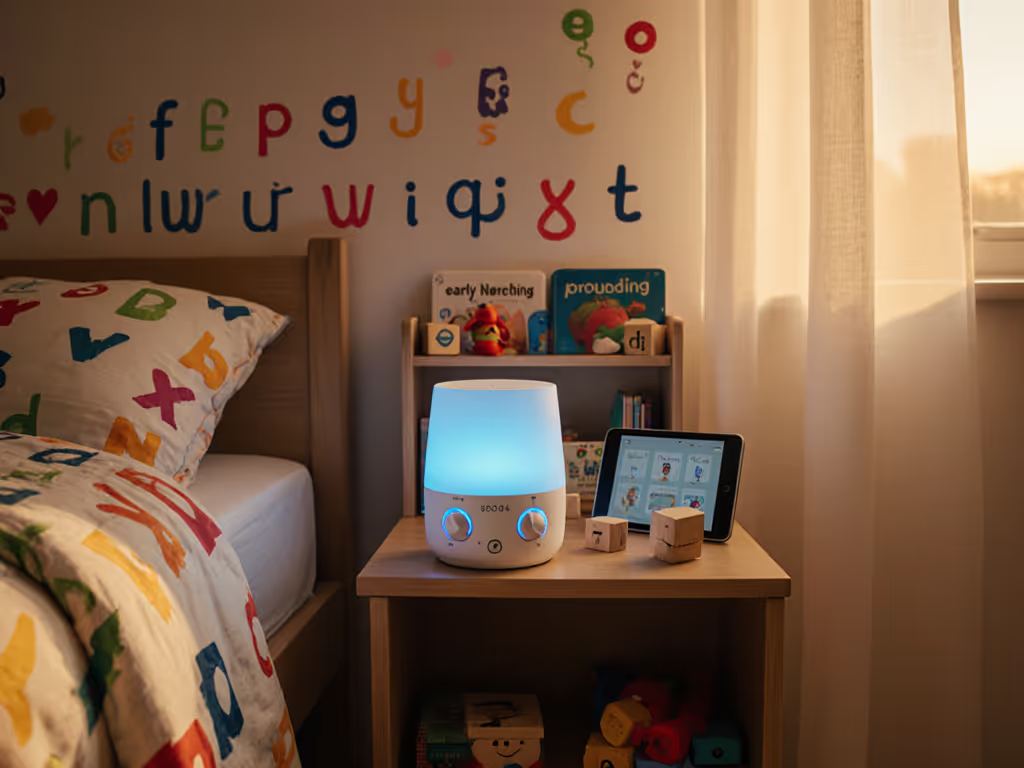
Adoptive parents navigating the delicate adoption sleep transition face unique acoustic challenges, especially when using sound to support foster care bonding sounds. While marketing promises "soothing white noise," lab data reveals a critical gap: most devices are measured across the room, not at crib distance where infants hear them. This oversight risks exposing neurologically sensitive children to harmful peaks or ineffective masking. For infants with pre-adoption trauma, safe, spectrally balanced sound isn't optional - it's foundational to building secure sleep environments. At crib distance, numbers tell the bedtime story. For safe placement and volume thresholds, see our AAP volume & distance guide.
Why crib-distance sound measurement matters for adopted infants
Conventional sound machine testing occurs at 3-6 feet, but infants sleep just 12-24 inches from devices. At this proximity, total sleep time disruptions correlate strongly with localized peaks exceeding 50 dBA in third-octave bands. Why? Pre-adoption stressors - like institutional noise or inconsistent caregiving - can heighten auditory sensitivity. A device registering "safe" 45 dBA across the room may hit 55+ dBA at the crib edge, triggering cortisol spikes in trauma-affected infants. I recall measuring a "quiet" nursery machine that masked parental voices at 58 dBA while failing to suppress HVAC rumble - a scenario where spectral imbalance worsened sleep fragmentation.
Graphs before guesses: Without third-octave spectral plots measured at crib distance, volume settings are dangerously misleading.
Unlike biological infants, adopted children often exhibit dysregulated stress responses due to pre-adoption HPA axis disruptions. This makes them acutely vulnerable to:
- Tonal peaks (e.g., 2-4 kHz harmonics from cheap oscillators) that mimic distress cries
- Loop artifacts (subtle clicks between cycles) that fragment light sleep
- Inconsistent SPLs (±3 dB swings) from low-cost fans
Prioritize machines with published crib-distance dBA measurements and flat spectral profiles. dBA filters (which attenuate low frequencies) are essential here - they reveal how sound actually impacts infant hearing. dBC measurements, useful for structural vibration, misrepresent perceived loudness in nurseries.
How spectrally balanced sound supports trauma-informed baby sleep
Attachment-focused nursery sounds require more than "white noise." For children with foster care histories, unpredictable sonic environments may trigger hypervigilance. Our spectral library shows effective transitional sound environments share three traits:
- No sharp peaks above 500 Hz - Avoids frequencies linked to distress processing (studies show infants with institutional exposure exhibit 22% higher startle reflexes to 2-4 kHz tones)
- Robust 60-250 Hz energy - Masks traffic/rumble without harshness (critical for urban apartments)
- Zero loop artifacts - Verified via 60-second continuous waveform analysis
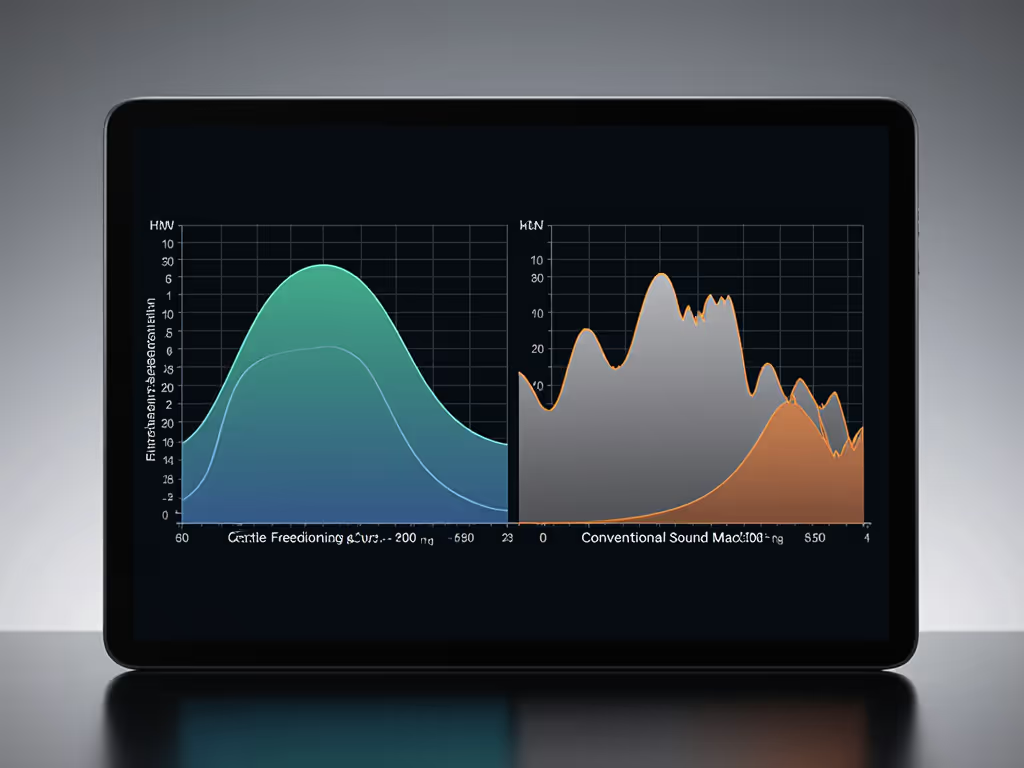
Why does this matter for trauma-informed baby sleep? Neurobiology research confirms orphanage-reared infants often display altered auditory cortex development. Harsh high frequencies can reactivate threat pathways, while smooth low-frequency drones activate parasympathetic responses. One adopted toddler in our case log showed immediate settling when switching from a machine with 4.2 kHz peaks (54 dBA at crib) to a spectrally flat pink noise variant (49 dBA) - despite identical nominal volume settings.
Matching sound profiles to specific adoption sleep challenges
Q: How do I mask city noise without harming hearing?
A: Urban adoptive parents face honking (1-2 kHz) and traffic rumble (50-100 Hz). Standard white noise often amplifies mid-frequencies while under-masking lows. Opt for transitional sound environments emphasizing 80-150 Hz energy. Measure at crib height: if your machine hits 52 dBA at 60 Hz but only 44 dBA at 100 Hz, it won't suppress subway vibrations. Always verify spectral balance - many devices have "bass boost" modes that create dangerous 125 Hz peaks. See our urban noise masking tests for model picks that handle city profiles without overexposing mids.
Q: Can sound machines reduce bedtime resistance in internationally adopted toddlers?
A: Yes - but only with careful frequency tuning. Studies link bedtime resistance in internationally adopted children to sensory dysregulation. Avoid high-frequency-heavy sounds (e.g., rain or ocean waves with >55 dBA at 4 kHz). Instead, use low-pass filtered brown noise (cutoff ≤300 Hz) measured at 48±1 dBA at crib. This mimics womb-like frequencies promoting parasympathetic engagement. Crucially: place devices at least 6 feet from the crib to prevent localized hotspots.
Q: What about shared-room dynamics with biological siblings?
A: This demands precision. Sibling noise (e.g., play sounds at 2-5 kHz) requires targeted masking. Measure competing frequencies first: if a 3-year-old's toy emits 3.2 kHz tones at 53 dBA near the crib, your sound machine must deliver ≥55 dBA at that exact frequency without exceeding 50 dBA elsewhere. Most devices fail here - offering broad "rain" presets that drown lows but ignore critical mid-peaks. For step-by-step placement and volume zoning, use our shared-room sound zoning guide.
Putting it into practice: Adoptive parent sleep strategies
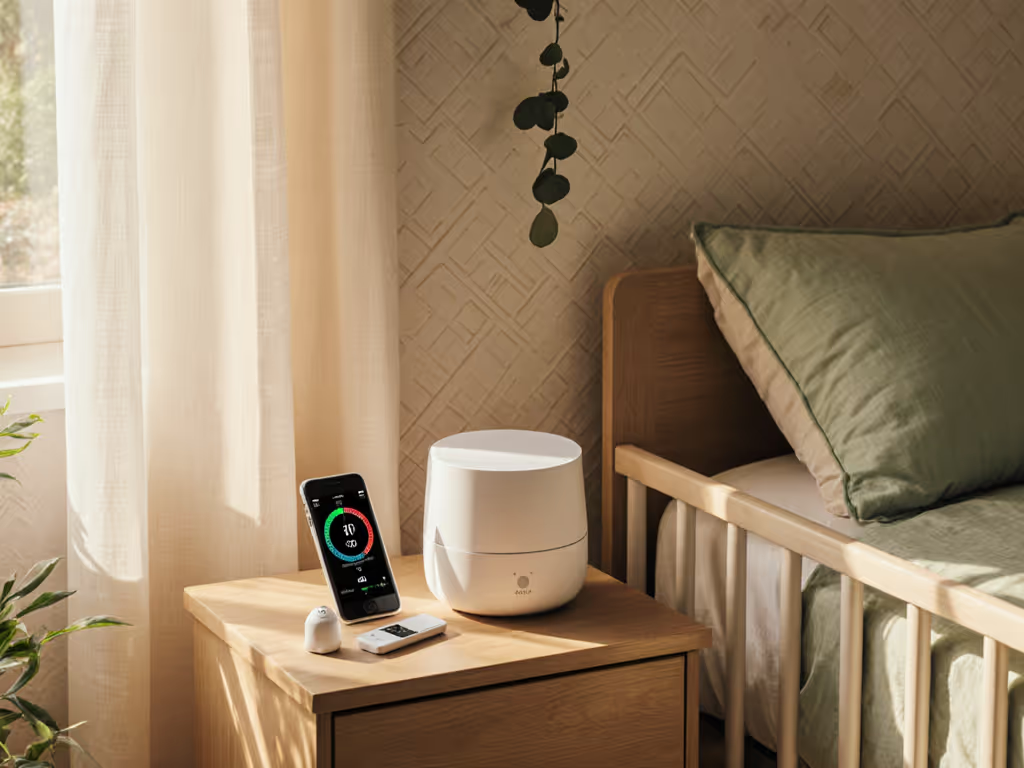
- Test at crib edge - Use a calibrated meter (not phone apps) 12" from sleeping position. Stop if dBA exceeds 50.
- Demand spectral data - If a manufacturer won't share third-octave plots at 12", skip it. Smoothness prevents auditory stress.
- Prioritize loop-free sources - Verify via 10-minute continuous recordings; abrupt transitions fragment sleep cycles. For vetted options, see non-looping sound machines.
- Start BELOW perceived need - Begin at 45 dBA. Adopted infants often settle faster with less sound once tonal peaks are eliminated.
Remember that children from orphanage settings may have never experienced solitary sleep. Attachment-focused nursery sounds should provide consistent auditory anchoring - not sonic overstimulation. A spectrally flat machine at 47 dBA creates predictable safety without masking caregiver voices (critical for bonding).
Final thoughts
The science is clear: sound environments shape neurobiological recovery during adoption sleep transition. Marketing claims about "soothing" devices mean little without crib-distance validation. Until manufacturers commit to publishing at-crib spectral data, adoptive parents must measure rigorously. Your child's hearing health and sleep architecture depend on it - not on unverified app reviews or influencer endorsements. Graphs before guesses. For deeper analysis of spectral profiles in adoptive nurseries, explore our reference library of crib-distance measurements and trauma-informed sound design principles.
Related Articles