In-Utero Sounds Decoded: Frequency & Safe Setup
By Maya Okafor • 2nd May
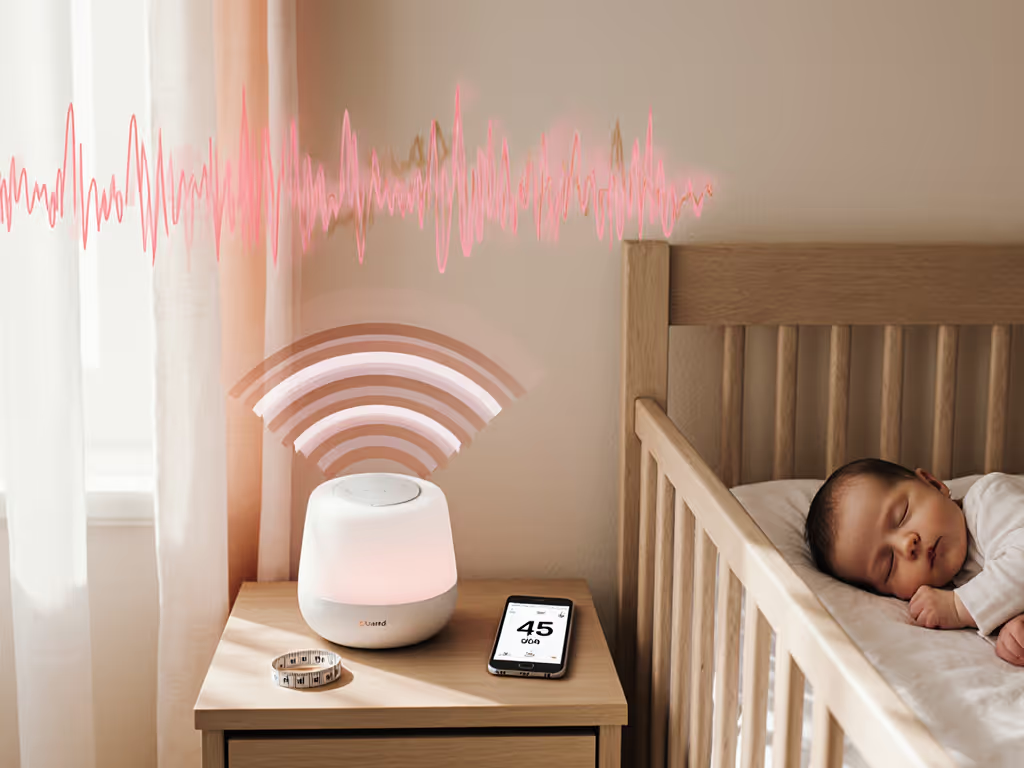
Understanding What Baby Actually Heard
The problem begins in the delivery room. After months in the womb, your newborn steps into a world of acoustic chaos: traffic, household appliances, siblings, door slams (frequencies across the full spectrum). But your baby didn't evolve to hear all of that, at least not yet. By understanding what infants actually heard before birth, you can design in-utero sound machines and womb sound replication setups that bridge that gap and help settle anxious nights with evidence-based confidence, not guesswork.
What the Lab Data Shows About Womb Sound
Inside the uterus, your baby's auditory system was working, but it was receiving a highly filtered version of the world. Fetuses become sensitive to sound around 20 weeks of gestation, and by the last trimester, the sound-processing parts of their brain are active.[1][2] To see how specific frequencies shape infant sleep stages, explore our infant brainwave frequency guide. But here's the critical part: the womb acts as a low-pass filter, absorbing and muffling sound frequencies above roughly 600 hertz.[3] This means your baby heard plenty of low-frequency rumble (maternal heartbeat, voices, ambient vibration), but very little of the crisp, high-frequency detail that adults rely on.
The sounds that did penetrate clearly were pitch shifts, intensity changes, and rhythmic patterns.[3] Your baby learned the cadence of your voice long before learning individual consonants. This constraint wasn't a bug in design; it was a feature. MIT-led research shows that early exposure to low-frequency input first, followed by fuller-spectrum sound, actually improves an infant's ability to recognize long-term patterns, exactly what's needed for emotion recognition, language learning, and sleep regulation.[1] When researchers reversed the order (full spectrum first), the models showed worse generalization and smaller temporal receptive fields, meaning a weaker ability to process information over extended time.[1]
The implications are sobering: premature babies, who miss that womb-like low-frequency foundation, later show measurable impairments in processing low-frequency sounds and emotion classification.[1] They were born before their auditory pathways finished learning under the womb's filtered conditions.
The Real-World Problem: From Science to Your Nursery
Here's where caregiver anxiety peaks. Most commercial sound machines don't replicate the womb's acoustic profile. They either blast full-spectrum white noise (mimicking the full-frequency-first scenario) or they're too muted for urban apartments where traffic and neighbors are constant. Parents are left guessing:
- Is my machine set to a safe volume?
- Am I choosing the right frequency band for my baby's age?
- Should I be using pink noise, white noise, or something else entirely?
- How do I mask city noise without harming hearing?
The fear is real, and it's justified. Exposing a developing auditory system to the wrong acoustic profile early on can narrow a baby's long-term listening skills and contribute to sleep fragility. Add to that the pressure to avoid "sleep crutches" and the guilt that follows when relying on a machine to get through the night, and you have a recipe for caregiver burnout.
Solving It: A Frequency-First Setup
The solution is to stop thinking of sound machines as one-size-fits-all and start thinking of them as tools for replicating the acoustic stage your baby's brain was expecting.
Step 1: Choose Your Starting Frequency Band
For newborns and early infancy (0-4 months), prioritize pink noise or brown noise. Both skew toward lower frequencies with less energy in the highs. This mimics the womb's natural filtering. If your device allows frequency selection, aim for a profile that emphasizes 100-500 Hz and gently rolls off above 600 Hz. Most consumer machines don't specify this, but descriptors like "womb sounds," "heartbeat," or "ocean" often fit the bill.
For older infants (4+ months) who have had time to build auditory resilience, a broader spectrum (including gentler mid-range content) can be introduced, but maintaining a low-frequency foundation remains protective.
Step 2: Set Volume by Room Size and Baseline Noise
This is where plain-language translation matters.
- Quiet room (rural, suburban, low baseline noise): Start at 40–45 dBA at your baby's crib. That's softer than a refrigerator hum, think of it as a gentle background presence, barely noticeable to adults in the same room.
- Moderate room noise (typical apartment, some traffic): 45–50 dBA at the crib works. This masks occasional sounds without dominating the environment.
- High baseline noise (busy street, thin walls, shared space): 50–55 dBA at the crib as an upper boundary. Beyond this, you're not masking; you're competing. If traffic, siblings, or construction are your main disruptors, our lab tests show which machines best mask real-world household and street noise.
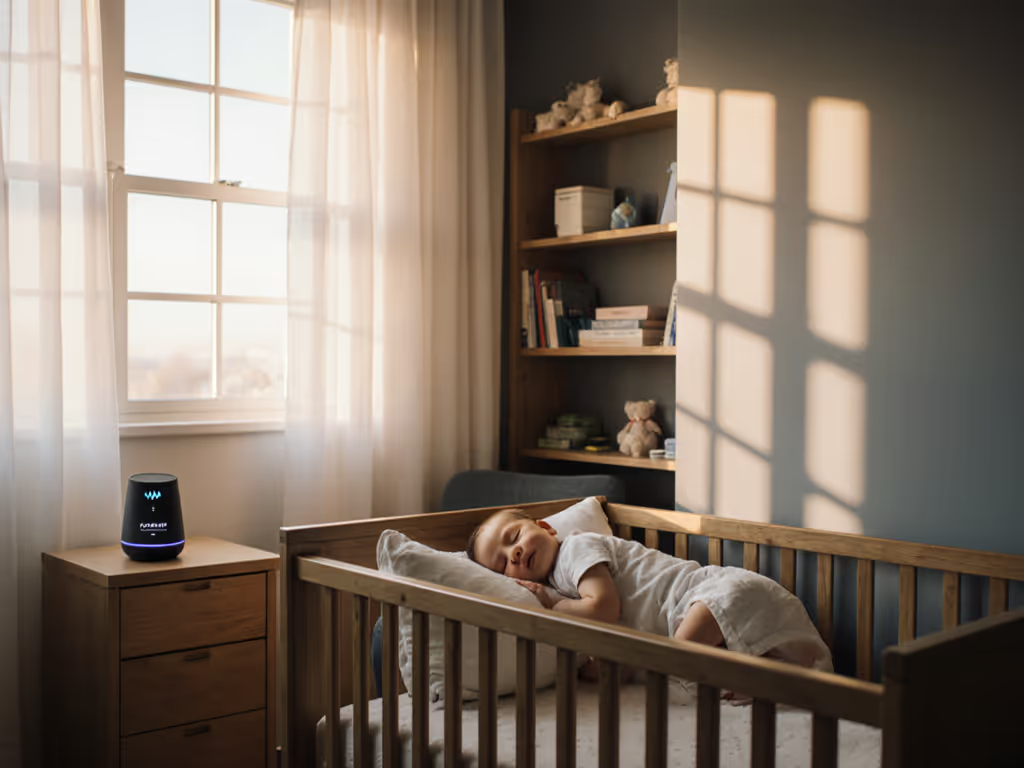
Here's the key: measure at the crib, not across the room. For placement and volume limits aligned with pediatric guidance, see our AAP-based volume and distance guide. Decibel levels drop about 6 dB for every doubling of distance from the source. A machine set to 60 dBA at one meter will be roughly 54 dBA at two meters. Most parents guess wrong because they dial by ear from their own position, not the baby's.
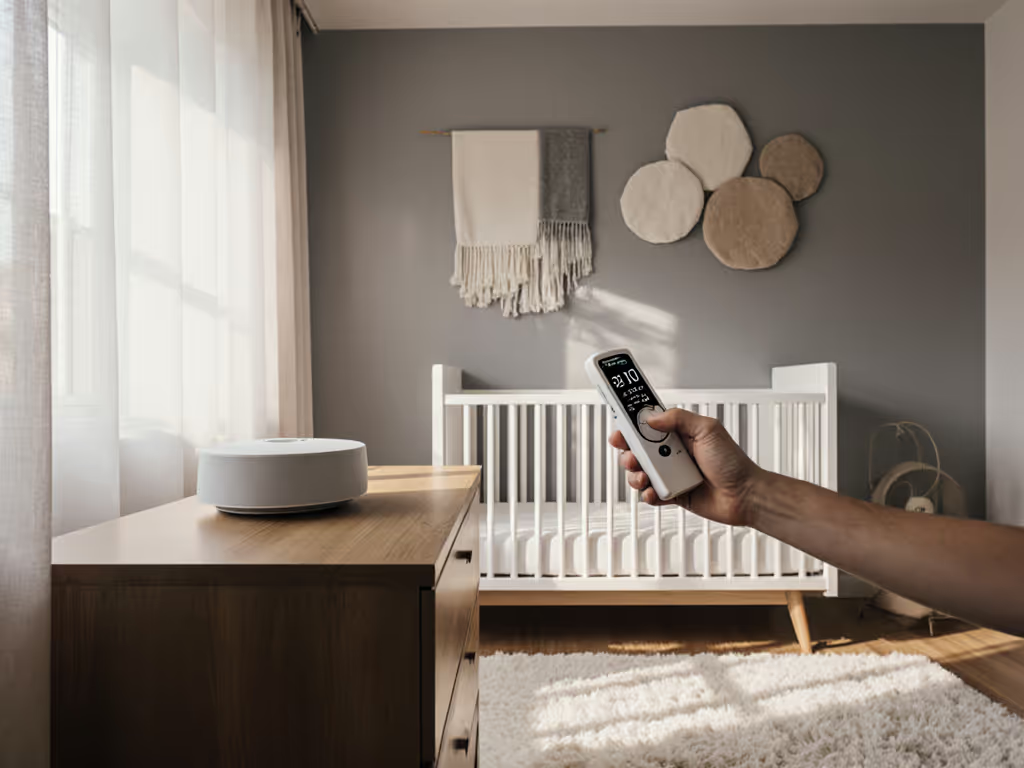
A practical shortcut: if the machine's volume control is a slider or dial without numeric labels, mark three positions with tape: low (safe start), medium (moderate masking), high (city-level). Test once with a simple phone app to confirm, write it down, and stick to it. Routines reduce guesswork.
Step 3: Monitor for Harshness and Self-Noise
Even low-frequency machines can have rough edges, thin, artificial tones or noticeable loops that wake sensitive sleepers. See our picks for non-looping sound machines with seamless tracks. Listen for a few minutes yourself. If it sounds like a buzzing fan or has an audible "click" at the loop point, it's poor quality and shouldn't be trusted long-term, no matter how inexpensive.
True womb sound replication should sound organic, with a very slight texture, not mechanical. If your machine has only one knob and plays one single sound reliably, that's actually a strength. One-knob, one-job devices tend to have fewer moving parts and more consistent performance across the battery life or wall power.
Putting It Into Practice: A Bedtime Checklist
Turn your frequency and volume knowledge into a repeatable ritual. Here's a simple setup checklist:
- Place the machine at least 1 meter from the crib (never closer, to reduce direct exposure).
- Select your frequency band (pink/brown noise preferred for early infancy).
- Set volume to your marked position based on room baseline.
- Run for 5–10 minutes before sleep to confirm it soothes rather than startles.
- Note the exact setting in your phone or on a small card taped to the machine.
- If switching rooms or traveling, replicate the setting exactly (no tweaking by ear).
Consistency plus measured settings equals calmer nights for everyone.
I learned this the hard way in a shared room with my cousin's twins: we used pink noise at a steady 44 dBA and taped a simple checklist to the dresser. Over two weeks, the consistent frequency and volume, plus the sequence, beat every fussy gadget. Neither twin woke the other, and the anxious nights became predictable.
Actionable Next Steps
This week: Measure the baseline noise level in your baby's sleep space using a free decibel app (take three readings at different times of day: morning, afternoon, evening, and average them). That baseline becomes your anchor for choosing your machine's safe zone.
Before selecting a machine: Ask the seller or manual: What is the frequency profile? Does it emphasize low frequencies? What is the reported dBA at 1 meter? If they can't answer, move on. A machine that passes your safety questions will support better sleep and clearer conscience than one chosen by luck.
For shared spaces or travel: Once you've found a machine that works, stick with it. Switching models mid-travel or mid-week resets your baby's acoustic comfort and defeats the routine. Buy an extra if budget allows, or use the same unit consistently.
The path from womb acoustics to nursery setup doesn't have to be mysterious. Ground it in what science tells us (low frequencies first, measured volumes, consistent settings) and you'll transform anxiety-driven guesses into confident, caregiver-driven choices.
Related Articles