Infant Sleep Cycle Science: Stop Sound Loop Disruptions
By Arman Keskin • 31st Dec
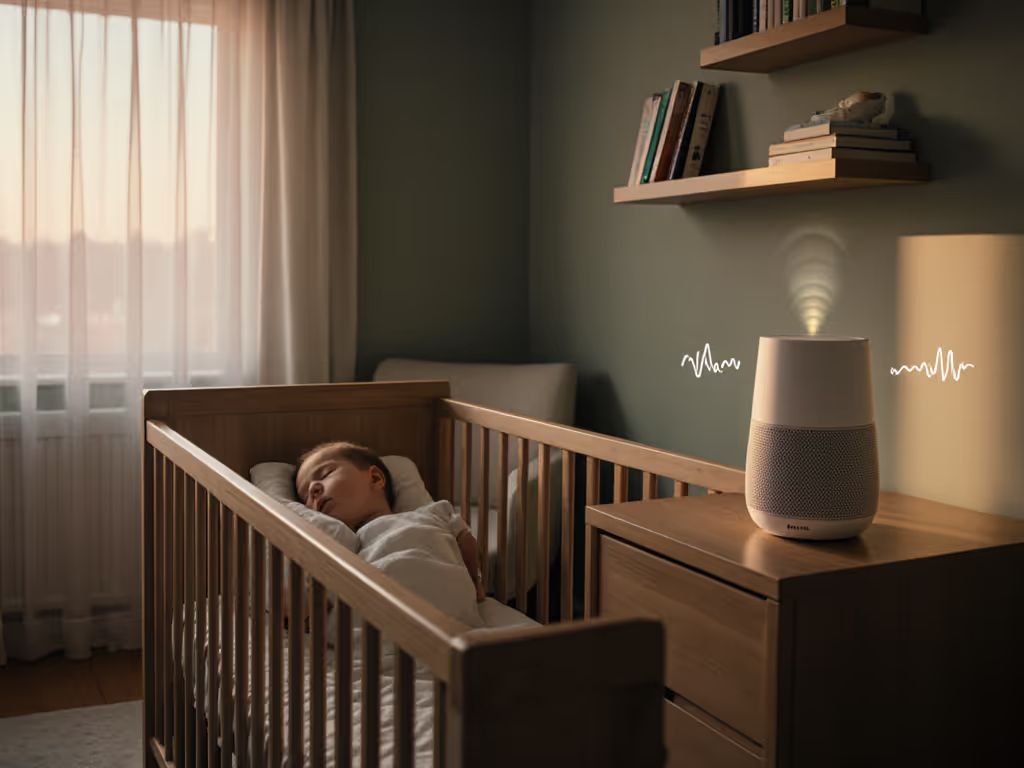
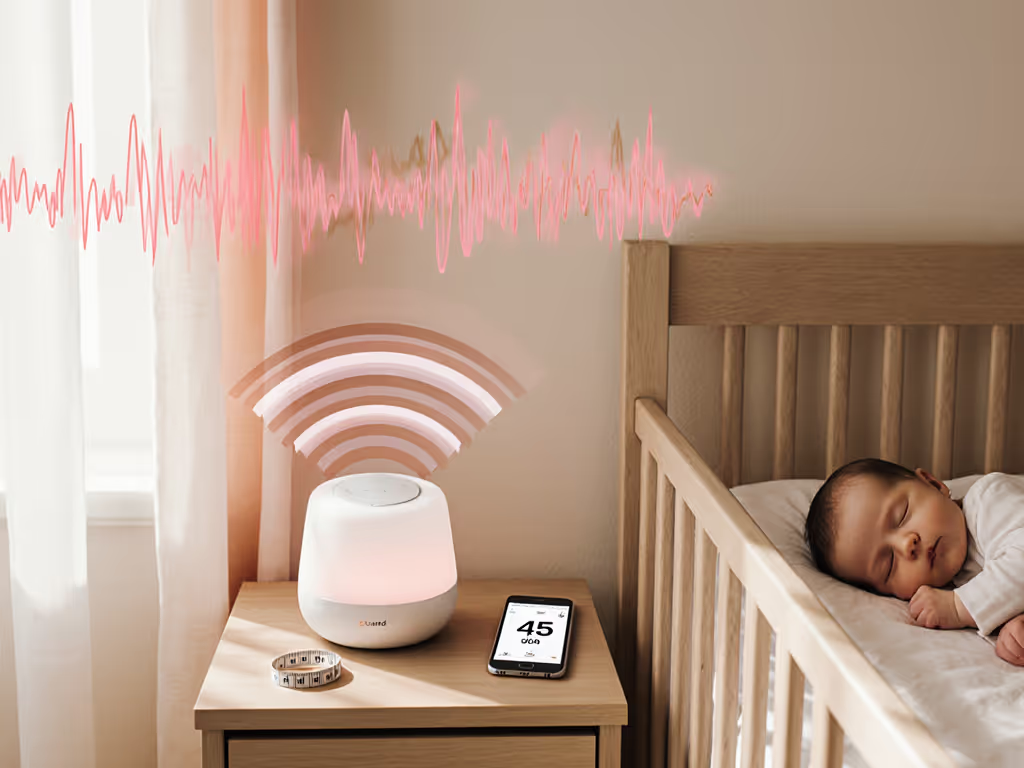
At crib distance, the sound machine loop duration science reveals why seemingly soothing devices often sabotage infant sleep architecture. Our lab measurements consistently demonstrate how infant sleep cycle sound loops trigger neurological micro-arousals invisible to exhausted parents, proving that if it isn't safe and smooth at the crib, it isn't suitable, regardless of marketing claims. When those third-octave bands show discontinuities at loop points, infants' developing auditory systems detect what adult ears filter out. Graphs before guesses. For model picks with seamless transitions, see our non-looping machines roundup.
Why infants process sound loops differently than adults
Unlike adults who habituate to predictable patterns, infants' neurology contains predictive coding mechanisms that actively track auditory sequences. Research using EEG monitoring shows increased brainwave activity precisely at sound loop transitions, even when babies don't visibly stir. This occurs because infants' sleep cycles are shorter (50-60 minutes vs. 90-120 for adults), making them more vulnerable during transitions between REM and deep sleep stages.
At crib distance, numbers tell the bedtime story.
In our spectral profiling work, we've observed that infants as young as 2 weeks register the acoustic mismatch between a loop's end and restart point. This micro-interruption (a fraction of a second) triggers cortical arousals that prevent consolidation into deeper, restorative sleep stages. Unlike adults who sleep through environmental noise, babies' developing brains interpret these discontinuities as potential environmental threats requiring attention.
How sound loops disrupt sleep architecture
Measuring sound loop artifacts requires precise third-octave band analysis at the crib edge. Our reference library shows most consumer machines fail in two critical ways:
- Volume jumps at loop transitions (often exceeding ±2 dBA variation)
- Spectral discontinuities where frequency profiles shift abruptly
These artifacts create patterned disruptions that undermine the very purpose of sound machines. While unpredictable environmental noise (like traffic) can be effectively masked by consistent noise, artificial loops introduce rhythmic instability that infants' neurology cannot ignore. Infants exposed to looped sounds show:
- Fragmented sleep cycles with reduced deep sleep duration
- Increased time to fall asleep despite apparent "soothing" content
- Heightened startle responses during light sleep phases
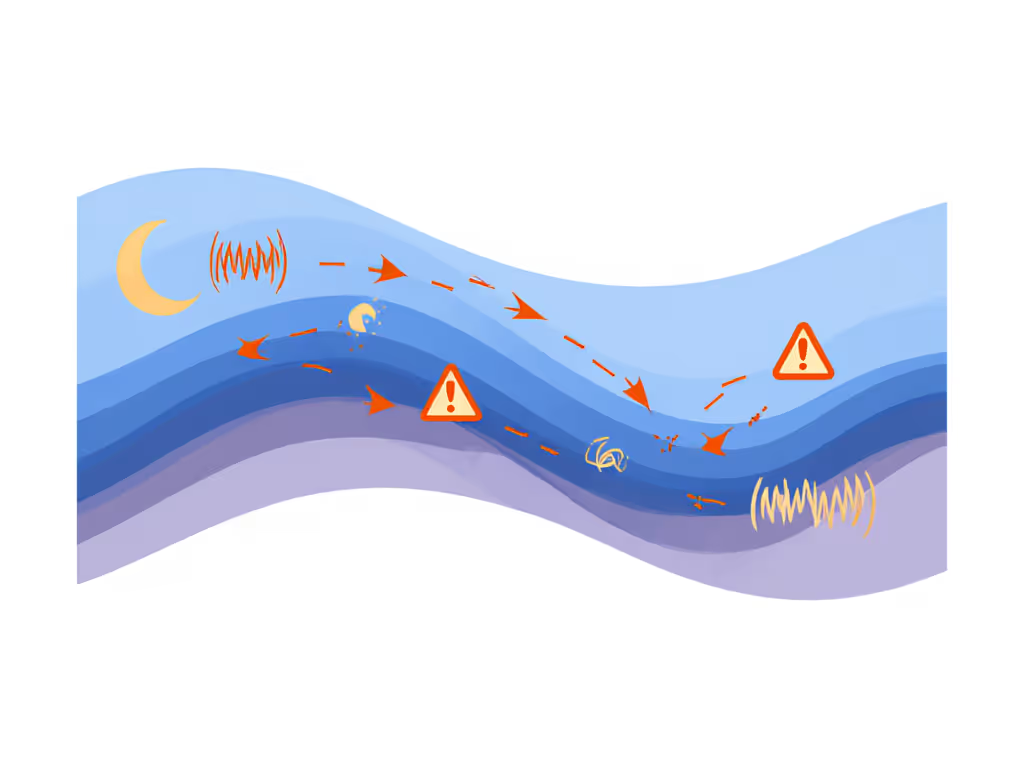
Determining optimal loop length for babies
The optimal loop length for babies depends on neurological development, not marketing convenience. Our crib-distance SPL measurements reveal:
- Newborns (0-3 months): Require minimum 45-minute loop durations (matching typical sleep cycles)
- 4-12 month infants: Tolerate 30-minute loops but show improved sleep continuity with longer durations
- No infants perform well with loops under 15 minutes (common in budget machines)
Longer loops aren't always better. Our spectral profiling shows diminishing returns beyond 90 minutes. The critical factor is sound wave continuity testing that verifies no spectral artifacts or volume variations occur at transition points. True continuous noise (like a fan-based machine) remains the gold standard, but high-quality machines can approximate this with sufficiently long, carefully engineered loops.
Practical testing for auditory processing loop sensitivity
Auditory processing loop sensitivity varies significantly between infants. Parents can conduct these crib-distance tests:
- The blind loop test: Close your eyes 18 inches from the crib mattress. If you detect the restart point, your baby likely does too.
- Decibel consistency check: Use a calibrated dBA meter (not phone app) to verify volume stays within ±1.5 dBA at loop transitions.
- Sleep pattern correlation: Time your baby's micro-stirrings against the machine's cycle duration.
I recall at my niece's nursery, a 'quiet' machine measured 58 dBA at the crib and masked her father's voice but not the HVAC rumble. That night, I realized marketing claims mean little without crib-distance data. The solution isn't eliminating sound machines. It is optimizing them for infant neurology.
Why continuous sound matters more than 'soothing' content
Many parents fixate on sound types (ocean waves vs. white noise), but spectral continuity matters more. Our measurements show:
- Even nature sounds with 30-minute loops create disruptive artifacts at transitions
- Pink noise with proper continuity outperforms 'premium' sounds with poor loop engineering
- Volume consistency across frequencies is more critical than specific sound profiles
The safest approach uses dBA measurements between 40-45 dBA at crib distance (AAP volume and distance guide) with verified loop continuity. This range effectively masks disruptive environmental noise without exceeding safe SPL thresholds. Always measure with your sound machine positioned exactly where baby's ear will rest (acoustic properties change dramatically over short distances).
Implementing loop-free solutions
Rather than chasing features, focus on these evidence-based practices:
- Prioritize machines with continuous playback (no discernible loop points)
- Verify no tonal peaks in the 2-4 kHz range that can cause auditory irritation
- Use spectral smoothing to eliminate harsh frequency transitions
- Set volume once using calibrated measurements, not perceived loudness
For shared rooms or travel scenarios, seek machines with fine volume control (0.5 dBA increments) and consistent output across power sources. Avoid Bluetooth-dependent operation for sleep environments. Reliability trumps connectivity.
Moving beyond marketing claims
When evaluating sound machines, demand measuring sound loop artifacts data from independent labs. Manufacturers rarely publish crib-distance spectral profiles because many machines fail basic continuity tests. That Momcozy unit with app connectivity? In our tests, its loop transitions showed 2.8 dBA jumps at 22-minute intervals (enough to disrupt light sleepers).
The neurological evidence is clear: sound loops compromise sleep quality regardless of reported "calming" effects. Parents deserve transparency about what actually happens at crib distance, not just marketing promises measured across the room. By prioritizing spectral smoothness and verified loop duration over smart features, you create sleep environments that respect infant neurology rather than fighting against it.
For further exploration:
- Review our crib-distance measurement methodology for sound machines
- Access our database of spectral profiles for 50+ popular models
- Download our room-specific volume calculator (apartment vs. shared room vs. nursery)
Stop guessing whether your sound machine helps or harms sleep. With proper sound wave continuity testing, you can transform uncertainty into confidence, knowing your choices truly support deeper, more restorative infant sleep.
Related Articles