Sound Machine History: Building Safe Infant Sleep
By Maya Okafor • 12th Apr
Understanding sound machine history reveals why today's infant sleep devices are safer and more effective than ever, and how to use them as part of a proven, repeatable routine rather than a novelty fix. From Edison's first phonograph cylinder to the precise white-noise generators designed for crib-safe decibel ranges, the evolution of sound technology has moved caregivers from guesswork to measured confidence.
How Sound Recording Technology Shaped Modern Infant Sleep
The journey of sound capture and playback directly informed how we now mask environmental noise in nurseries and shared rooms. In 1877, Thomas Edison invented the phonograph, which recorded and played back sound through mechanical vibration of a needle and stylus. This breakthrough (capturing actual sound waves and reproducing them on demand) became the foundation for all subsequent audio devices, including the white noise generator machines families rely on today.
What Edison proved over a century ago still holds true: a recorded, repeatable sound is more predictable than ambient chaos. Unlike natural white noise or random recordings, a clean, controlled signal allows caregivers to set it once and trust the result. When you place a device in a specific location and calibrate its volume, you're leveraging the same principle Edison discovered: that mechanical reproduction of sound creates consistency.
The Arc From Phonograph to Safe Sleep Technology
The baby sound technology evolution accelerated after Edison's 1877 phonograph, particularly as gramophones and later disc-based systems proved that sound could be standardized and mass-produced. By the early 1900s, devices like the Victrola, introduced in 1906 as the first commercially available home record player, had already established that sound machines belonged in domestic spaces.
That same principle underpins today's sleep-specific sound devices: a controlled, repeatable source placed at a measurable distance from the crib. The microphone, invented in 1877 alongside the phonograph, further revolutionized sound capture and amplification, making it possible to produce consistent, calibrated output across many units. This standardization is why modern infant sound machines can deliver the same decibel reading (say, 44 dBA at the crib) across different rooms and homes, a reliability Edison's contemporaries only dreamed of. For placement and volume best practices, see our AAP-based distance and decibel guide.
Why Consistency Matters More Than Gadgetry
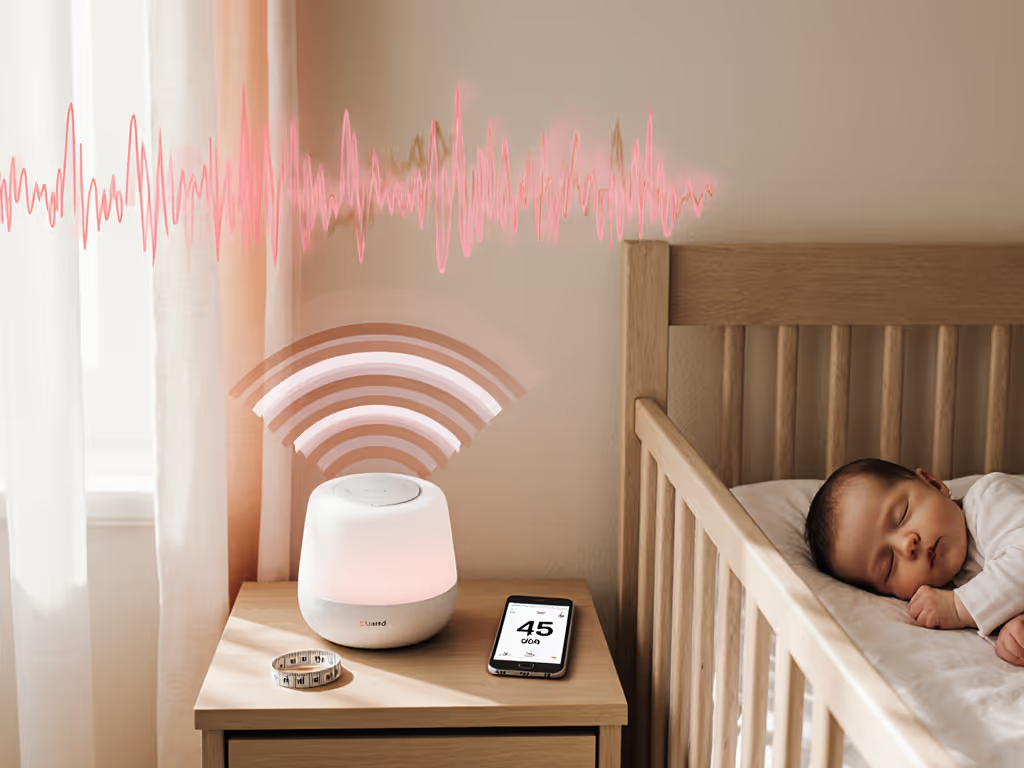
The baby sleep technology timeline shows a clear trend: as recording and playback became more reliable, the focus shifted from novelty and complexity to simplicity and repeatability. In my early days advising families on sleep environments, I watched a shared room with my cousin's twins transform not because of the fanciest device, but because we applied one principle consistently: a fixed volume, a simple checklist, and the same sequence every night. A steady 44 dBA of pink noise, a taped reminder of the order (sound first, lights dim, door at a specific gap), and two weeks of no variation, it worked far better than rotating through ten different modes or apps.
That experience cemented my conviction: consistency plus measured settings equals calmer nights for everyone.
The Case for Measured Sound
Modern sound devices inherit from decades of standardization work. Just as Edison's phonograph had to reproduce sound at a consistent volume, today's infant-focused machines must hold a steady decibel level at realistic distances. The engineering rigor that made early Victrolas reliable now powers devices designed to stay safely below 50 dBA at crib distance, the threshold most pediatric audiology research identifies as appropriate for infant sleep without ear damage risk.
When you set a machine to a measured, repeatable level and stick with it, you eliminate the anxiety that comes from wondering, "Is this too loud? Is it helping?" Data beats guesswork.
From Lab Specs to Your Nighttime Routine
Translating sound machine history into actionable practice means understanding three lab-to-home principles:
- Decibel measurement at crib distance, not across the room. Manufacturers often cite decibels at a microphone placed 1 meter away, which gives a false impression if your crib is 3 feet from the device. Ask for dBA readings at 12 inches from the device, that's your safest reference.
- Frequency profile matters as much as volume. Learn how to choose white, pink, or brown noise safely for newborns. The stereo sound technology developed by Bell Labs in 1937 taught us that different frequency ranges (low rumble vs. bright highs) affect how we perceive sound and how we fall asleep. Pink noise, which balances all frequencies, is gentler than pure white noise (which can sound harsh) or low-frequency rumble alone.
- Repeatability beats app connectivity. Devices with mechanical volume dials and onboard sound memory don't depend on Wi-Fi, cloud saves, or a smartphone app. If the power drops, they retain their settings. We lab-tested which models truly resume correctly in our power outage auto-restart review. This "one-knob, one-job" design philosophy directly descends from the reliable, simple record players of the early 20th century, machines that worked the same way every single time.
Setting Up a Repeatable Routine
- Measure your baseline. Use a sound-level meter app (run 2-3 readings to average them) or a decibel meter at the crib. Document the ambient noise level in your room without the machine running.
- Choose a target range. Aim for 50 dBA or below at crib distance for infants; 45 dBA is ideal for light sleepers or shared rooms.
- Select one device and one sound. Pink noise is the default; avoid loops that restart or change mid-cycle.
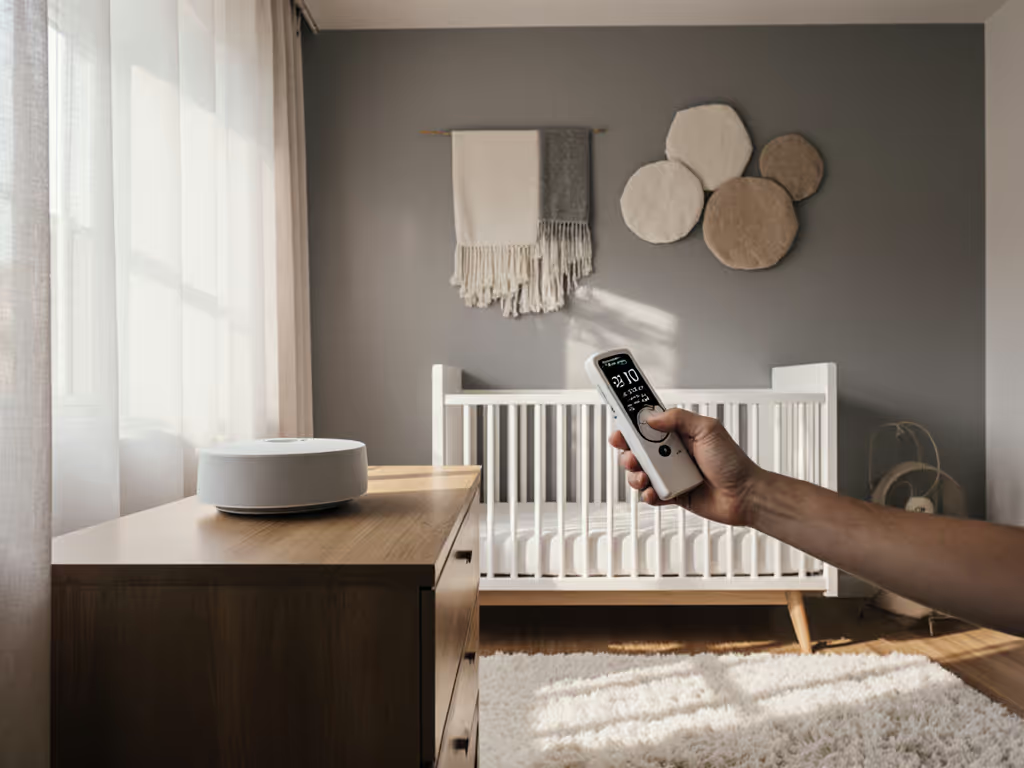
- Set volume and tape the dial. Once you reach your target dBA, mark the dial or place a small sticker at the current setting. This prevents accidental volume creep.
- Run the same sequence every night. Sound on, lights dim, door to a specific gap, same time. Consistency at safe volumes beats novelty; repeatable settings calm families.
- Test in real conditions. Does a sleeping infant startle when you turn it on or off? Does it mask the neighbors' voices or traffic? Adjust placement (angle, distance) rather than volume if masking is inadequate.
Practical Guidance for Different Rooms and Travel
Sound machines excel in three scenarios, each with a slightly different approach:
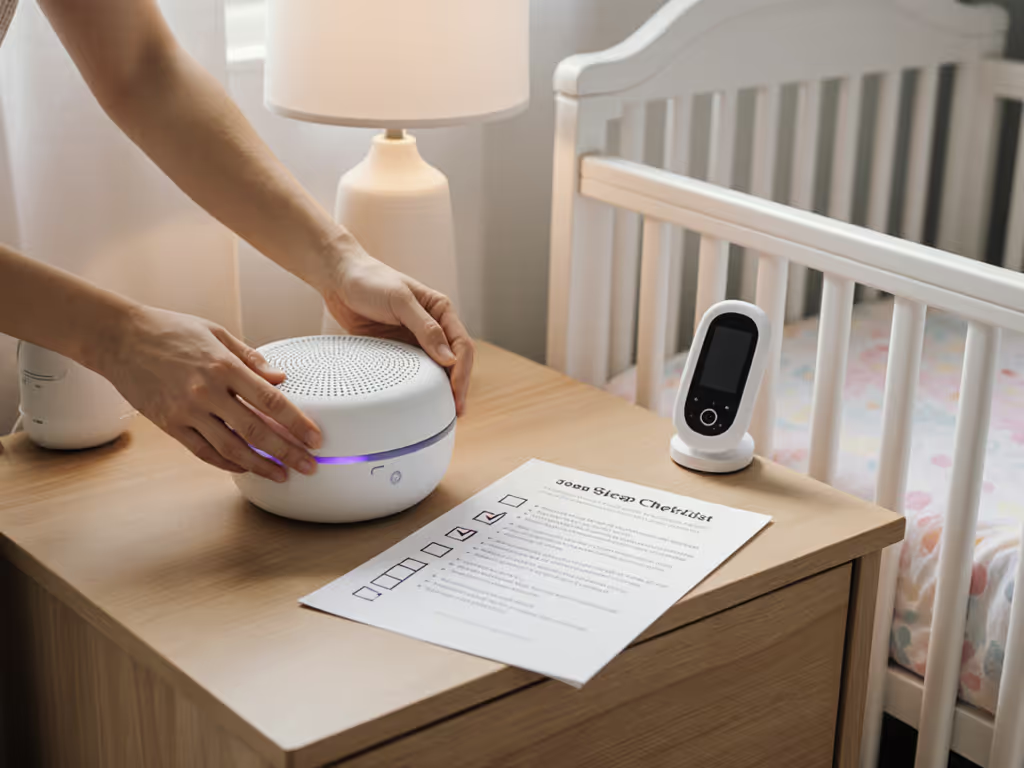
Nursery or dedicated baby room: Start at 45 dBA if the room is relatively quiet (suburban house, not near major roads). Use a steady pink noise. The principle here is masking predictable, low-level disruptions (HVAC rumble, distant traffic). Your routine checklist can stay taped to the dresser or door.
Shared room (baby with parents or siblings): Aim for 48–50 dBA at the crib but measure the decibel level where the other occupant is sleeping to confirm they're not disturbed. A sound machine between the crib and the other sleeper(s) helps. This setup requires a bit more trial, so keep notes on placement and volume for the first week.
Travel and daycare: Compact, USB-rechargeable machines with on-device volume memory are non-negotiable. You need to recreate the exact settings in a hotel room, daycare nap room, or grandparent's house without fiddling with an app or losing the setting after a power hiccup. Test it in your car or at a friend's house first so you know the sound signature holds up away from home. For vetted portable options, check our crib-safe travel sound machines roundup.
Why Safety and Simplicity Go Together
The sound machine innovation history teaches a lesson that applies today: the safest devices are those you can understand and control without complexity. Modern pediatric guidance recommends white or pink noise because the science is clear and decades-old. Gimmicks (rainbow projectors, Wi-Fi connectivity, "AI-adaptive" volume) add failure points and mental load without improving sleep or safety.
Infant hearing is precious. A device that holds a consistent 45 dBA, has a durable dial, and remembers its setting is far safer than a smart speaker that can unexpectedly increase volume due to a firmware update or connectivity hiccup. Simple, same, safe. That's not just a phrase, it's how devices actually protect the ears and routines they're meant to support.
Your Next Step: Document and Test
Starting tonight or tomorrow nap, take one concrete action:
- Measure the ambient decibel level in your baby's sleep space using a smartphone sound meter app or a standalone meter. Write down the number (e.g., "54 dBA without machine").
- Choose your target (45–50 dBA based on the room and your infant's sleep depth).
- Select a device with a visible, tactile volume control and the ability to hold settings without an app, no Wi-Fi required.
- Run a three-day consistency trial: Same volume, same sound (pink noise ideally), same time each night or nap. Note whether sleep latency (time to fall asleep) or continuity (number of wake-ups) improves.
- Record your settings on a small card or sticky note at the device itself. This becomes your "setup memory" for travel, caregiver handoffs, and confidence that you've found your safe zone.
Consistency at measured, safe volumes isn't boring, it's liberating. You stop second-guessing yourself and start sleeping better alongside your baby. That's the inheritance of over a century of sound technology: the hard engineering work has been done. Your job is simply to use it the same way, every night, so your family can rest.
Related Articles